
The Part in His Hair
Terri Morris and Jannie Ligons had never met, yet both of their police files describe an officer whose hair was parted. Daniel didn’t part his hair. The State asked the jury to read the similarities among the women’s accounts as one man’s pattern. That only works if each detail came from the woman, and not from the people interviewing her.
Two women, a month apart
Morris reported an assault by an officer on May 24, 2014, downtown. Ligons reported one on June 18, on the northeast side. The two women didn’t know each other.
In the case files as they went to trial, both women describe a man with parted hair: Ligons on the right, closer to the middle than the side, and Morris on one side. On color they don’t agree. Ligons’s officer was blond, and Morris’s had dark hair. Scott Adams 00064, 00123; 01150. Scott Adams
numbers are pages in the case file of Daniel’s trial lawyer, Scott Adams.
Daniel didn’t part his hair. Photographs OCPD took of him in June 2014 show short dark hair brushed up and back, and so do photographs from 2012, when he graduated from the police academy.
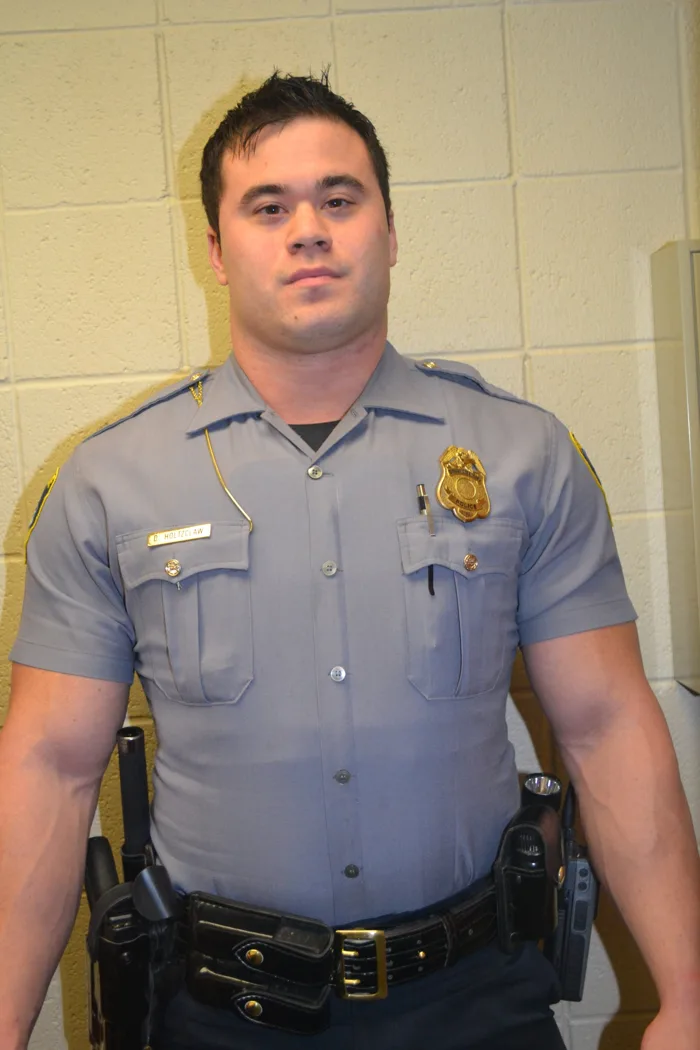
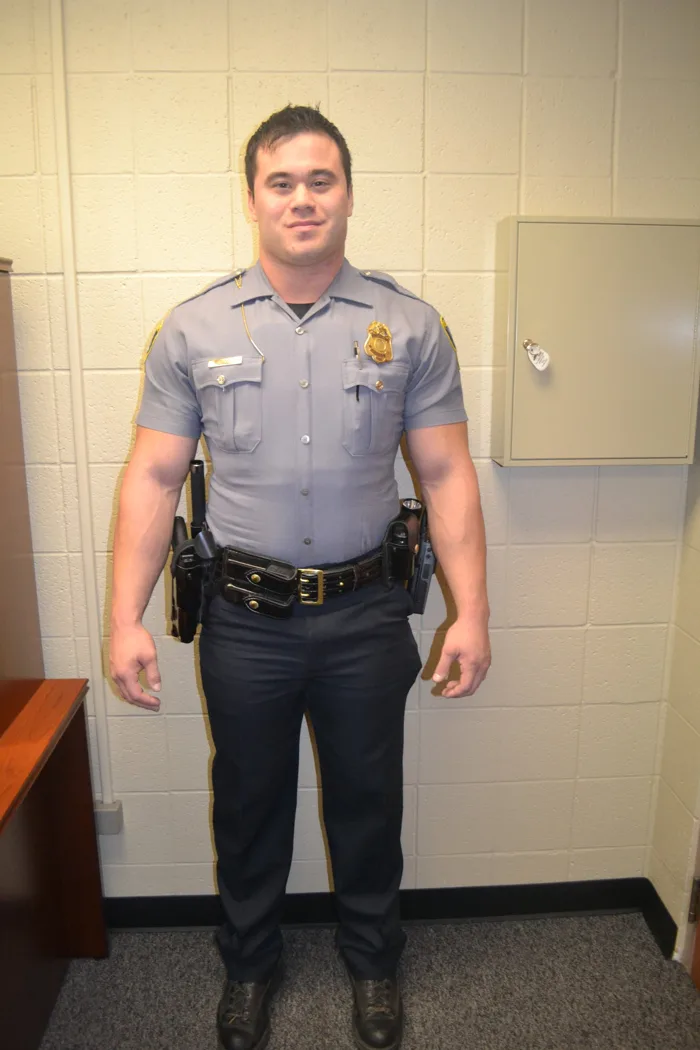
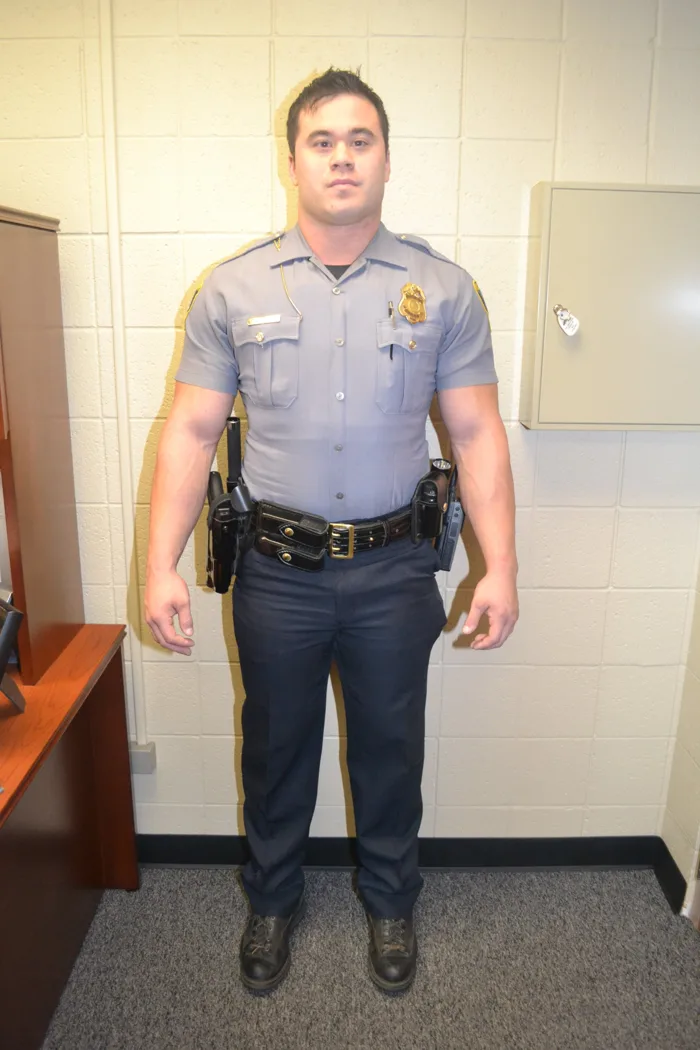
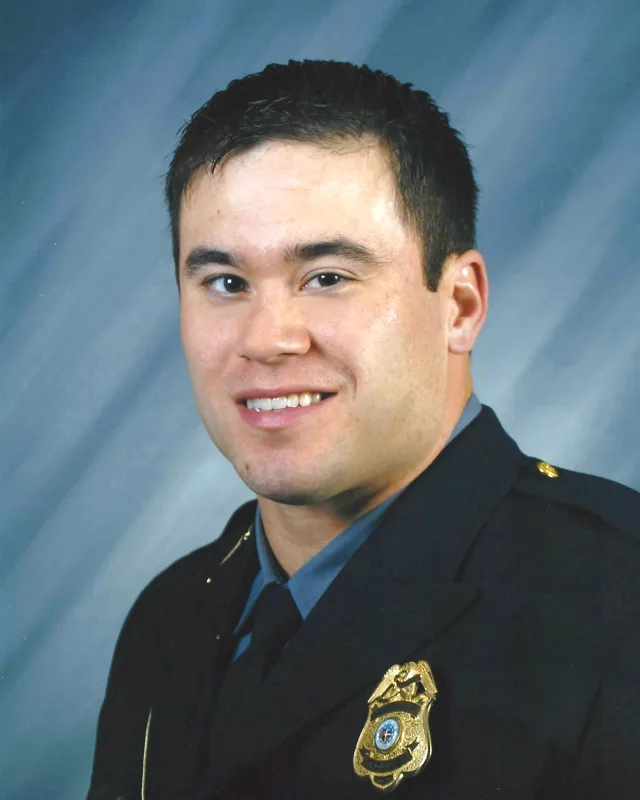
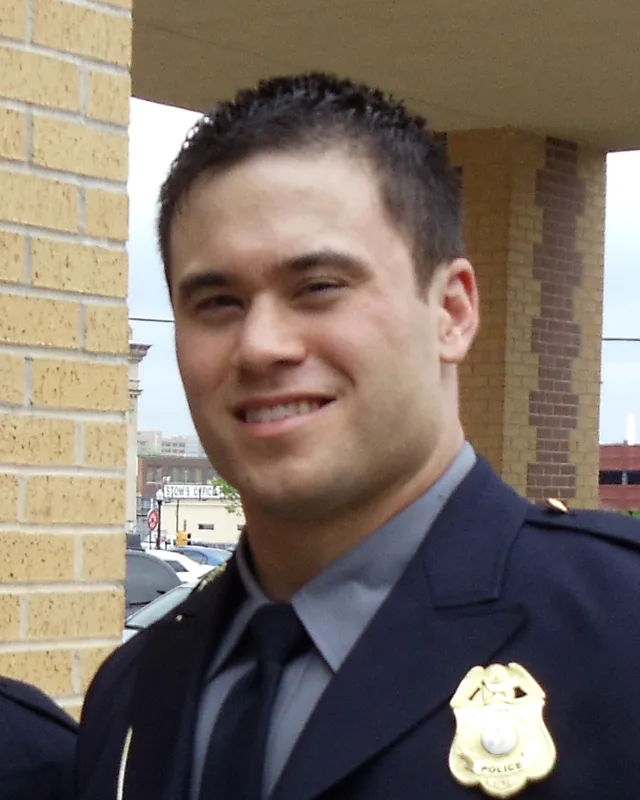
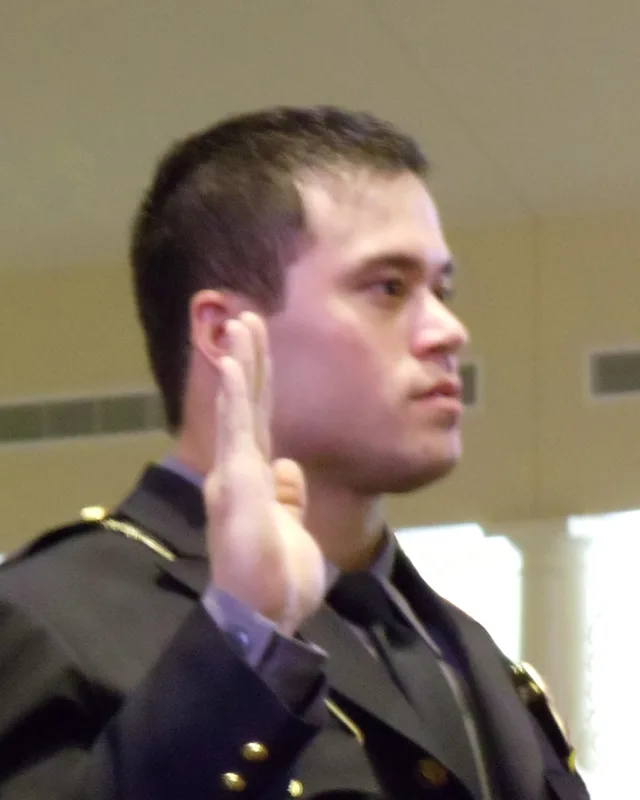
The earliest recorded mention of a hair part is a detective’s question.
On the evening of June 24, Detective Rocky Gregory interviewed Morris on tape, minutes after she had looked at a photo array that included Daniel. Ligons had reported six days earlier, and Gregory and Det. Kim Davis had questioned Daniel about her on June 18. Holtzclaw interview with Dets. Davis and Gregory, June 18, 2014, Scott Adams 00024–25, 01146.
Near the end of the interview, Morris volunteered something about the officer’s hair. It was neat. Gregory asked the next question.
MORRIS: Looked like not no strand of hair didn’t look like it was out of place.
GREGORY: Do, do what?
MORRIS: It didn’t look like none of his hair was out of place.
GREGORY: Did he have a part in his hair?
MORRIS: Yeah.
GREGORY: You’re showing your left side. Is that right?
MORRIS: Well, I don’t know which side, but he had a part.
Morris hadn’t mentioned a part on May 24 or at the photo array that evening. Gregory brought it up. Taken alone, his first question could pass for a natural follow-up to her remark that no hair was out of place. The second is harder to read that way. When she gestured, he put a side on the record for her, and she answered that she didn’t know which side.
Gregory’s written summary leaves out his question and her one-word answer. It gives the description as if she had offered it herself: He had dark hair with a part on one side.
Scott Adams 01150.
Asked in 2019 whether the part matched Daniel, Gregory said, I think at one time he did.
Of the time when Morris would have been with him: I don’t know if he had a part or not then.
Gregory Dep. 108:13–19 (Jan. 17, 2019). Nobody asked him what prompted his question.
Both women’s hair-part reports went in the same afternoon.
Neither Gregory’s report of the Morris interview, nor any report recording Ligons’s description of a hair part, existed in the system until the afternoon of July 24. In about two and a half hours that afternoon, the Sex Crimes unit entered both of Gregory’s Morris reports and most of the written record of the Ligons case, including Davis’s account of a hospital interview she had done thirty-six days earlier. Gregory’s reports went in first, at 1:51 and 1:55. Davis’s followed at 2:19, and Officer Wesley Booth’s detailed supplement at 3:20. A paperwork backlog could explain why so much went in at once, but Gregory had asked Morris about a hair part a month before any report of Ligons describing one had been entered.
Every OCPD report ends with a trailer recording when it went into the department’s system. The table lists each description of the officer in either case in the order it was given, with the date it was entered. Bracketed notes are ours.
| Given | Report | Entered | The officer’s hair |
|---|---|---|---|
| May 24 | Patrol report of Morris’s first account | May 27 | Dark skinned white male with black hair.[No part mentioned.] Scott Adams 01116 |
| June 18, morning | Booth’s crime report on Ligons | June 18, 8:23 a.m. | White male, 6'00", stocky, 37 to 39. [Hair field blank.] Scott Adams 00054–55 |
| June 18 | Lt. David Wegner’s supplement; he first heard Ligons’s account | July 24, 3:57 p.m. | ‘blondish’ colored hair[No part mentioned.] Scott Adams 00130 |
| June 18 | Booth’s detailed supplement of his interview of Ligons | July 24, 3:20 p.m. | light colored hair which was possibly parted on one sideScott Adams 00123–24 |
| June 18 | Davis’s report of her hospital interview of Ligons | July 24, 2:19 p.m. | blonde hair with a part on the right side… closer to the middle than the side of his headScott Adams 00064 |
| June 24, 6:37 p.m. | Det. Higginbottom’s report of Morris’s photo array | June 25, 10:15 a.m. | He had really dark hair.[No part mentioned.] Scott Adams 01145 |
| June 24, evening | Transcript of Gregory’s taped interview of Morris | July 24, 1:55 p.m. | Gregory: Did he have a part in his hair?Scott Adams 01155 |
| June 24, evening | Gregory’s summary of that interview | July 24, 1:51 p.m. | dark hair with a part on one sideScott Adams 01150 |
The only description of Ligons’s attacker entered the day she gave it, Booth’s crime report from that morning, says nothing about his hair. Booth’s detailed supplement wasn’t entered for five weeks. Scott Adams 00054–55.
The trailers themselves aren’t reliable, by Detective Gregory’s own admission. Both of his Morris reports list Lt. Timothy Muzny as the typist. Shown them in 2019, Gregory said Muzny didn’t type any reports for us.
A homicide secretary transcribed the interview, he said, and he put it into the system himself, possibly by pasting it from Word.
He didn’t know why the system named Muzny. Gregory Dep. 103:3–104:8.
The times are off too. The summary’s trailer has Muzny typing it at 1:51 and approving it at 1:54, a minute before Gregory entered it as reporting officer at 1:55. Gregory agreed that can’t be true
: the times are skewed, I can’t answer that.
Gregory Dep. 184:17–186:3. He didn’t dispute the date, so the July 24 entries stand. But on his own reports, the trailers get the typist and the order of events wrong, and the reports carry no other record of how they were made.
What Ligons said on June 18 can’t be checked.
An entry date doesn’t say when a report was written. Booth may have dictated his supplement on June 18 and had it sit in a queue. Davis may have written hers from notes she took at the hospital.
Davis did take notes. She told the jury she wrote as Ligons talked. Asked in 2019 what happened to her notes from the victim interviews in this case, she said, I threw them in the trash.
Trial Tr. 1152:5–7; Davis Dep. 90:5–23. No dictation from Booth, if there was one, is in the file. Nothing survives that could show what Ligons said about the man’s hair on June 18.
Ligons’s own memory doesn’t settle it. Asked at her 2018 deposition to list everything she had told police about the officer’s appearance, she said he was a white male with blond hair, and said nothing about how he wore it. The hair part came up only when a lawyer had her read Booth’s report aloud. Ligons Dep. 125:11–128:16, 178:14–179:1 (Dec. 14, 2018).
Either Ligons described a hair part on June 18, and Gregory brought her detail into his interview of Morris six days later, or she didn’t, and a part appeared in her reports only after Gregory had asked Morris about one, entered by the same unit on the same afternoon as his. The only other possibility is a double coincidence: Ligons happened to describe a part; Gregory, knowing nothing of it, happened to ask Morris about one; and Morris happened to say yes to a detail that wasn’t true of Daniel. That’s possible, but it isn’t likely.
Whichever it was, the tape shows how a false detail got into Morris’s account: a detective asked her about it, she said yes, and his summary left out the question.
The accounts can’t be treated as independent.
The thirteen women’s allegations ranged from groping and indecent exposure to rape and oral sodomy. What tied them together at trial was the details their accounts shared, and that only counts for something if each woman’s details came from her own memory. The same small group of detectives interviewed accuser after accuser, many first interviews weren’t recorded, and reports were often entered weeks later, several cases at a time. The police reports.
The hair part matters because it’s demonstrably false: Daniel didn’t part his hair, and photographs from 2012 through June 2014 show it. When the same false detail turns up in two separate accounts, the likeliest source isn’t what either woman saw. It’s the investigation. The tape shows a detective raising it, and his written summary leaves that out and presents it as her own description. Other shared details, such as the officer releasing his penis through his fly (discussed here), are very likely false too, but they can’t be disproved the same way. They went through the same detectives and the same process, most of those interviews weren’t taped, and the notes went in the trash. UNCUFF believes they deserve far less weight than the jury was asked to give them.
The full descriptions are on the pages for Jannie Ligons and Terri Morris.