
One Accuser’s DNA Carried Twelve Others
The State tried all thirty-six counts involving thirteen women as one case. Adaira Gardner was the only accuser with physical evidence said to implicate Daniel. The question is whether that evidence affected only the allegation it concerned, or lent credibility to the whole pattern the State asked jurors to believe.
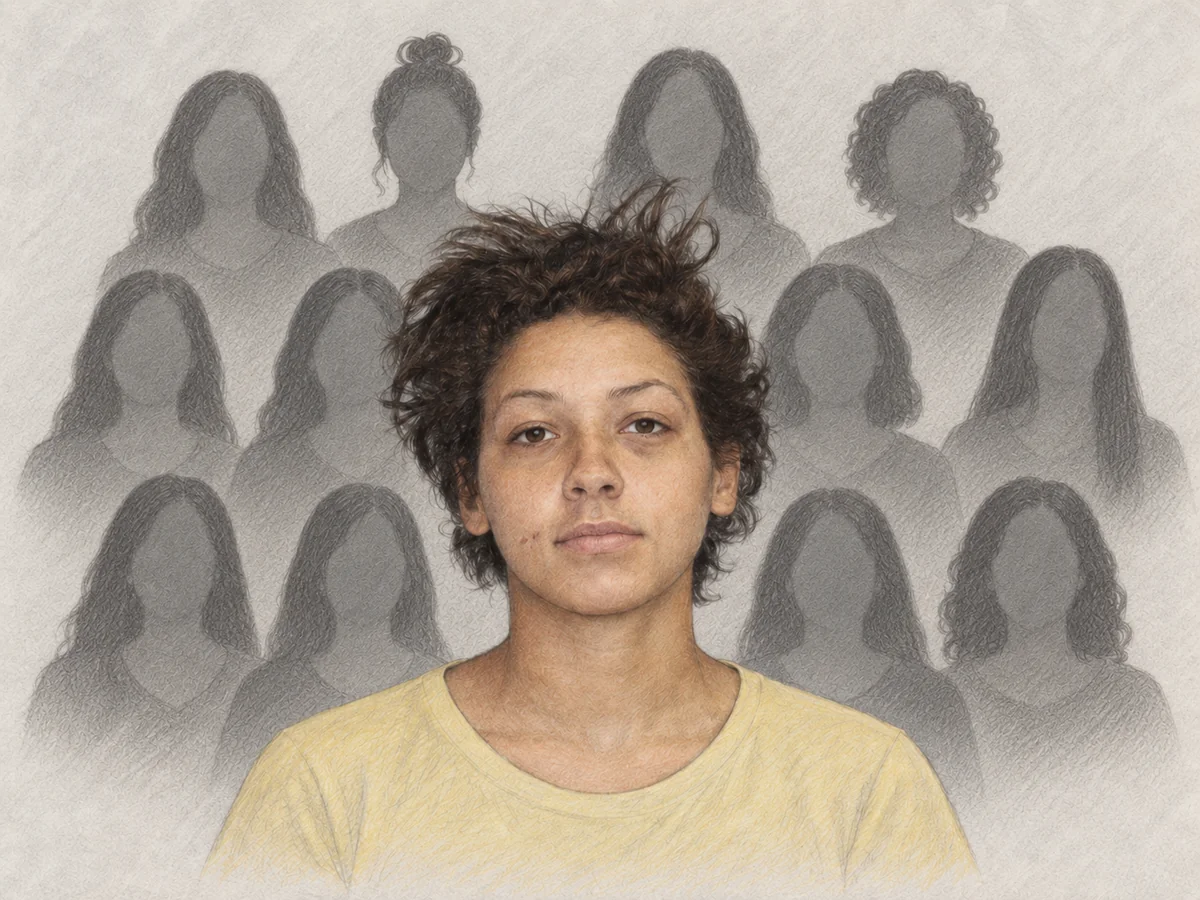
Thirteen accusers, one trial, one DNA result.
The DNA match concerned one accuser
The DNA match concerned one accuser: Adaira Gardner. But Daniel was not tried thirteen times. All thirty-six counts involving all thirteen women went to a single jury in a single proceeding, and the State argued the accounts as a connected pattern. Within that structure the DNA was unique: the only forensic evidence offered as physical corroboration of any sexual-assault allegation in the case.
The State’s laboratory attributed the DNA to Gardner. But evidence can carry persuasive weight beyond the narrow fact it proves. In a trial built on the collective credibility of thirteen accusers, evidence that appeared to corroborate one of them could make the whole pattern seem more credible.
How the State presented the allegations together
Prosecutors did not present the allegations as isolated events to be kept in evidentiary compartments. In closing, they emphasized the number of accusers and challenged jurors to believe that thirteen women had independently invented allegations against the same police officer. The Gardner DNA was invoked among the circumstances supporting the State’s case.
The Oklahoma Court of Criminal Appeals upheld the joint trial on essentially that theory:
The court was addressing joinder, not making a finding about the impact of the DNA. Even so, its reasoning matters to the factual structure of the trial: the evidence overlapped, proof of one offense was relevant to other charges, and the allegations were permitted to reinforce one another.
Gardner described that practical effect in sworn testimony. She said a prosecutor told her that her testimony would “help the other women” because she was the only accuser with physical evidence. Gardner Dep. 147:4–6. Whatever the prosecutor intended by the statement, it reflects the obvious persuasive role of apparent physical corroboration in a case that otherwise depended almost entirely on credibility.
The court said the DNA went only to Gardner’s three counts. The same opinion said all the counts overlapped.
Ruling on the ineffective-assistance claim, the OCCA wrote that the DNA evidence “went only to the three charges involving A.G., Counts 30, 31, and 32,” and reviewed its effect on those three alone. Earlier in the same opinion the court had upheld trying all thirty-six counts together because the proof overlapped and proof of one offense was relevant to the others. The DNA cannot be both: confined to three counts for the prejudice question, and part of a body of proof that carried across all thirty-six for the joinder question. Holtzclaw v. State, 2019 OK CR 17, ¶¶ 45–46 (pp. 35–36) ↗; joinder at ¶ 21.
Juror comments about the DNA
Nor is the concern only theoretical. In a post-trial media interview, one juror called the DNA “very crucial.” Another said it helped get deliberations moving at a point when some jurors had a hard time believing some of the accusers. KOCO 5 News, “Only on KOCO 5: Juror Speaks about Daniel Holtzclaw Trial” (Dec. 18, 2015); ABC News, “How the Daniel Holtzclaw Jury Decided to Send the Ex-Oklahoma City Police Officer to Prison for 263 Years” (May 20, 2016); Gill et al. (2017), p. 37.
Those comments go beyond consistency with the concern addressed here. Jurors heard thirteen accusers in a single trial organized around an asserted pattern, and received one piece of forensic evidence that appeared to corroborate part of it. Their post-trial descriptions indicate that the DNA played a role in the broader deliberations, not only in deciding Gardner’s counts.
Help fund the work.
UNCUFF funds investigation, forensic review, records work, post-conviction litigation, and telling the stories of wrongfully convicted people to the public.