
Jannie Ligons
Jannie Ligons's June 18 allegation put Daniel at the center of a sex-crimes investigation. Her first Sex Crimes interview was not recorded, her description differed from him in several respects, and a photo lineup prepared for her was never shown.
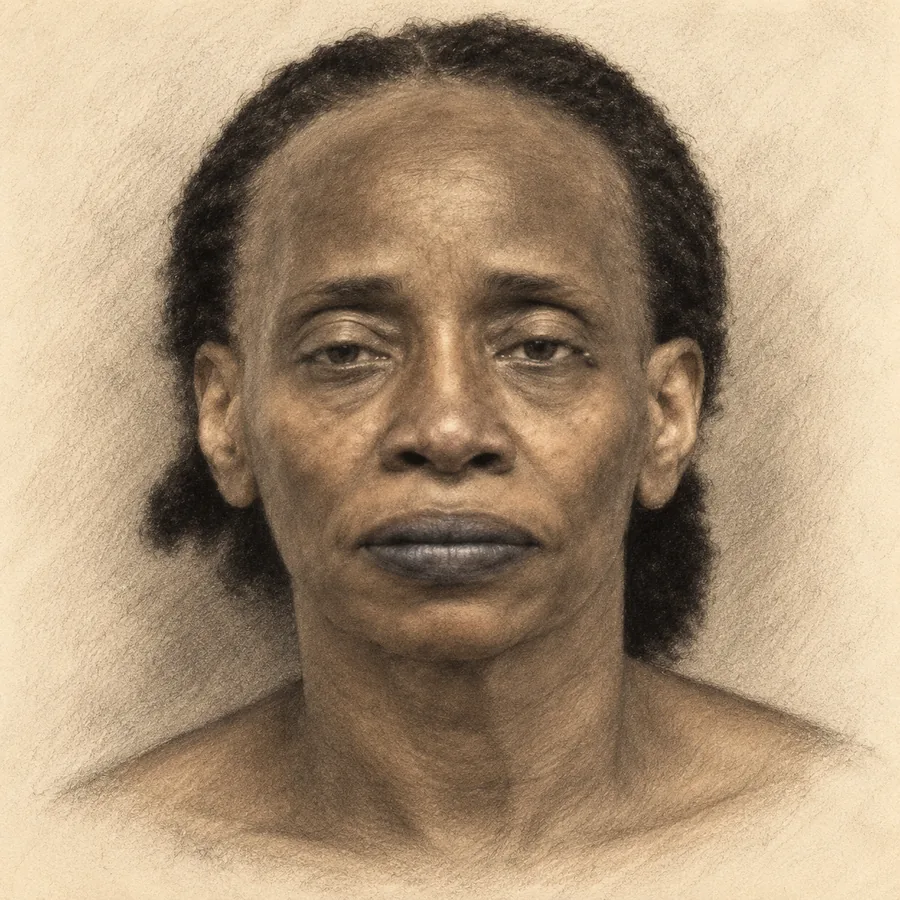
The case changed on June 18.
Before Jannie Ligons came forward, Terri Morris had reported an assault by an unidentified officer (Case 14-041539, reported May 24, 2014), but Daniel had not been identified as a suspect in that case. On June 18, 2014, Ligons reported that an Oklahoma City police officer had sexually assaulted her after a traffic stop earlier that morning.
The Sex Crimes Unit was involved within roughly an hour. Its supervisor, Lt. Tim Muzny, was notified at 4:25 a.m. and offered to take over the investigation. Detective Kim Davis was already en route to Southwest Medical Center to interview Ligons. Scott Adams 00119, 00125.
Ligons did not identify Daniel that morning. Police arrived at his name by elimination. Deputy Chief Kuhlman and Major Wenzel obtained a list of every two-shift Springlake officer driving a 2013 all-black patrol car, then used automatic vehicle locator (AVL) data to eliminate them by position. Every officer was eliminated except Daniel, not because AVL placed him at the scene, but because he had logged off his computer after his shift, so his locations could not be determined at all. Scott Adams 00070, 00126.
After June 18, investigators built the larger case around her allegation.
A traffic stop became a sexual-assault investigation.
By Ligons's own testimony, the stop began as a suspected-impairment stop. The officer told her he had stopped her because I was swerving,
and asked whether the cup in her console held alcohol; she answered that it was Kool-Aid and offered to let him taste it. Prelim. Tr. I, 254–55. The prosecutor's own closing recounted Daniel's recorded interview the same way: I thought she was DUI... I kept her there for 15 minutes.
The stop ended with no citation and no arrest. Trial Tr. 4305.
Detectives went to Springlake Station before two-shift lineup and approached Daniel there. He immediately acknowledged that he had made a stop at N.E. 50th and Lincoln after his shift and had not called it in. He denied sexual misconduct. He agreed to come downtown for an interview. Scott Adams 00070.
The prosecution argued that Daniel targeted African American women. Nothing in this record establishes that Daniel knew a Black woman was driving when he decided to stop the car.
Ligons was driving a red 2004 Pontiac Grand Am with darkly tinted windows. Asked by Detective Davis whether he could tell how many people were in the car, Daniel answered that he could not: the windows were dark tinted and he couldn't see what was inside. Scott Adams 00155, 00032.
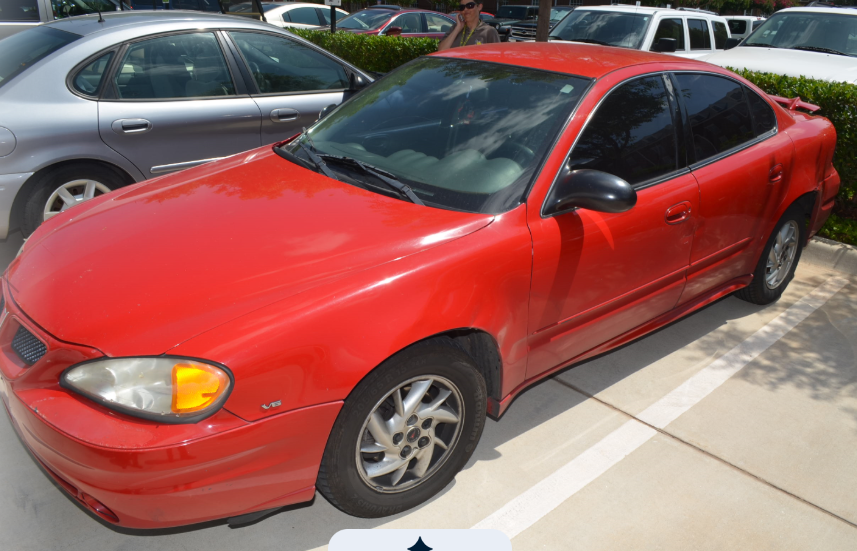
At trial, Daniel’s lawyer put State’s Exhibit 8, a photograph of Ligons’s car taken at noon, in front of Detective Davis:
Q: “Broad daylight. Can you see inside of that car?”
DAVIS: “No.”
Q: “You would certainly agree with me that at 2:00 a.m. in the morning it’d even be more difficult to see in that car.”
DAVIS: “Yes.”
Davis also confirmed that on this stop Daniel had not run Ligons’s name, written her a ticket, or put himself out on the radio. Trial Tr. 1098–1100; see also 1058; Scott Adams 00022, 00098.
Davis's own report records Ligons saying she had no victim history and that her only arrest, in 1985, resulted in no charges. Scott Adams 00061.
Ligons underwent a sexual-assault examination at Southwest Medical Center; the kit was collected and booked into the OCPD property room at approximately 7:50 a.m. Investigators processed the patrol car for prints and serology and collected eighteen evidence items. Scott Adams 00058, 00150–00154.
Beside a building with 32 cameras, and a second police car in its lot.
At 2:02 a.m. Daniel stopped Jannie Ligons on NE 50th Street just west of Lincoln Boulevard, a street with a speed limit of 40, near a hotel and a convenience store. The stop happened beside the Old Surety Insurance building. Surety had 32 cameras,
and one of them recorded the stop from 2:02 to 2:16. Scott Adams 00121, 00125; Tr. 761:1–8, 771:12–16. A second OCPD patrol car sat in Surety’s lot the whole time. Its driver, Sgt. Justin Walters, was inside the building working an off-duty security job. Scott Adams 00121, 00146.
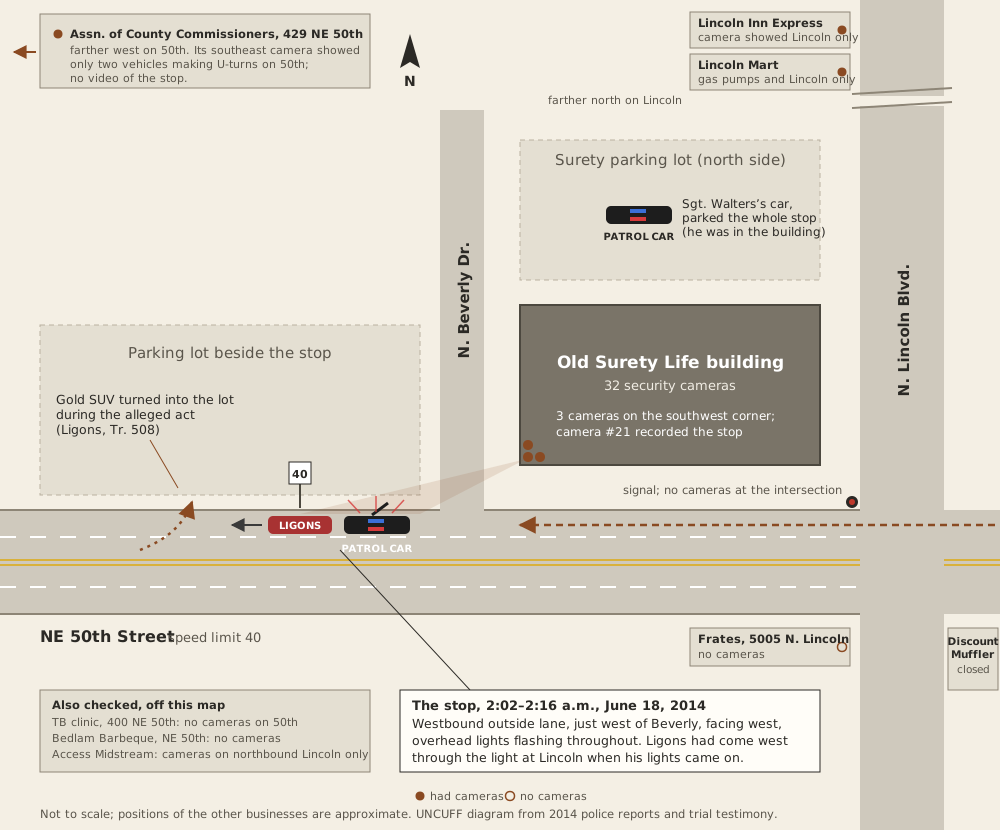
Daniel’s overhead lights flashed for the entire stop. Daniel’s lawyer asked Ligons whether the lights could be seen from a very good distance.
Yes, you can.
And it stands out.
It stands out.
Tr. 545:2–14. Ligons testified that during the alleged act a car passed by. And it was, like, a gold SUV,
turning into the parking lot beside them, and that Daniel watched the car pass by.
Tr. 508:14–21. We found no record of any effort to identify that driver.
In closing, the prosecutor put Ligons on the list of women assaulted at a secluded location.
The same prosecutor told the jury that Daniel takes a chance anyways.
Tr. 4173:10–13, 4163:14–16.
It was two in the morning, Ligons said there wasn’t much traffic, and Daniel, who had finished his shift, didn’t radio the stop. Tr. 477:14–15, 4163:6–11; Scott Adams 00146.
The underwear that could have tested the account was never collected.
At the preliminary hearing, Ligons was specific about how the exposure happened: He didn't undo — he just unzipped it and took it out. I remember very well.
The pants stayed up; only the fly was opened. Prelim. Tr. I, 266–68.
The underwear Daniel wore during the stop was never examined. He told detectives it was in the washer, but no one went to get it. The interrogation video from that afternoon shows fitted, thigh-length underwear consistent with compression shorts under his uniform pants. And the exemplar pair introduced at trial, the type his girlfriend said he wore to work every day, has no fly. Scott Adams 00104; Trial Tr. 1145–46, 4118–19 (Def. Ex. 4). If Daniel was wearing that kind of underwear, the mechanism Ligons described required getting past a garment with no fly, something her account never mentions and, because the underwear was never collected, something that could not be tested. The same fly mechanism appeared in seven other allegations, and the State's DNA-transfer theory depended on it.
What she said she took before driving.
Ligons told Davis hours after the stop that she had smoked two marijuana joints; at the preliminary hearing it was one hit of a friend’s joint, and at trial a puff, maybe without inhaling. Scott Adams 00061; Prelim. Tr. I, 249; Trial Tr. 1030.
The pills dispute.
In his recorded interview, Daniel told detectives he had looked in Ligons’s purse at her direction and seen pill bottles, and he named hydrocodone. Scott Adams 00078–00087. The State ran her 2014 prescription records, found none, and told the jury in closing, There’s a lie.
Trial Tr. 1026, 1032–33, 4305. Nobody ever looked in the purse. So we don’t know whether or not she had any hydrocodone pills in there, do we?
Davis: No.
Trial Tr. 1098.
The description Ligons gave did not match Daniel, and police noticed the same day.
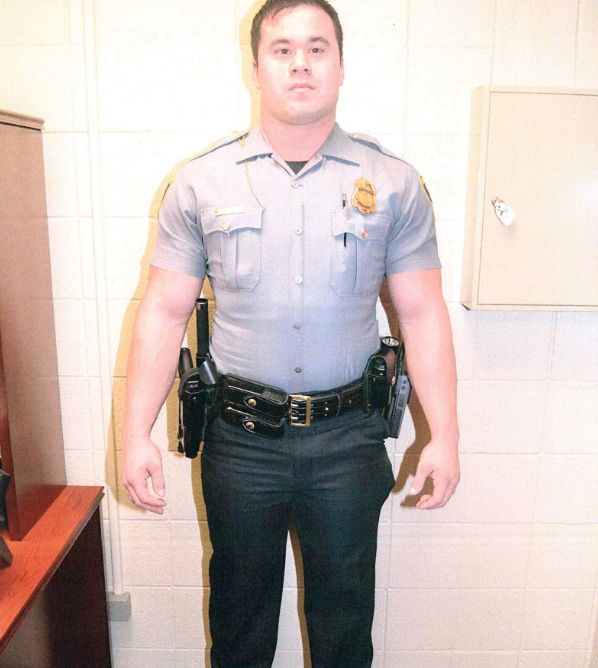
At the end of Detective Davis's report of her interview, Ligons described the man who assaulted her. The department's own booking data and the probable-cause affidavit describe a different man. Scott Adams 00064, 00072, 00239.
| Ligons's description | Daniel Holtzclaw, per OCPD's own records |
|---|---|
| White male | Mixed race: I’m half Japanese,as he told the detectives in his recorded interview Scott Adams 00044. |
| 35 to 45 years of age | 27 years old on the date of the stop (DOB 12/10/1986) |
| 5'07" to 5'09" | 6'02" per booking data; 6'01" per the OLETS return |
| 225 pounds, “thick” build | 260 pounds per booking data; 240 per the OLETS return |
| Blonde hair, parted on the right | Black hair, no part |
| No facial hair, no glasses | — |
Scott Adams 00064, 00072, 00239, 00438.
It is also the wrong hairstyle. Ligons did not simply say the officer had blonde hair. She described it as parted on the right, and added that the part sat closer to the middle of his head than the side. Scott Adams 00064.
Photographs of Daniel taken that same afternoon show no part in his hair. CSI Chelsea Gordon photographed him at Springlake Station on June 18, hours after the stop, and expressly for use in a photo lineup. Scott Adams 00152.
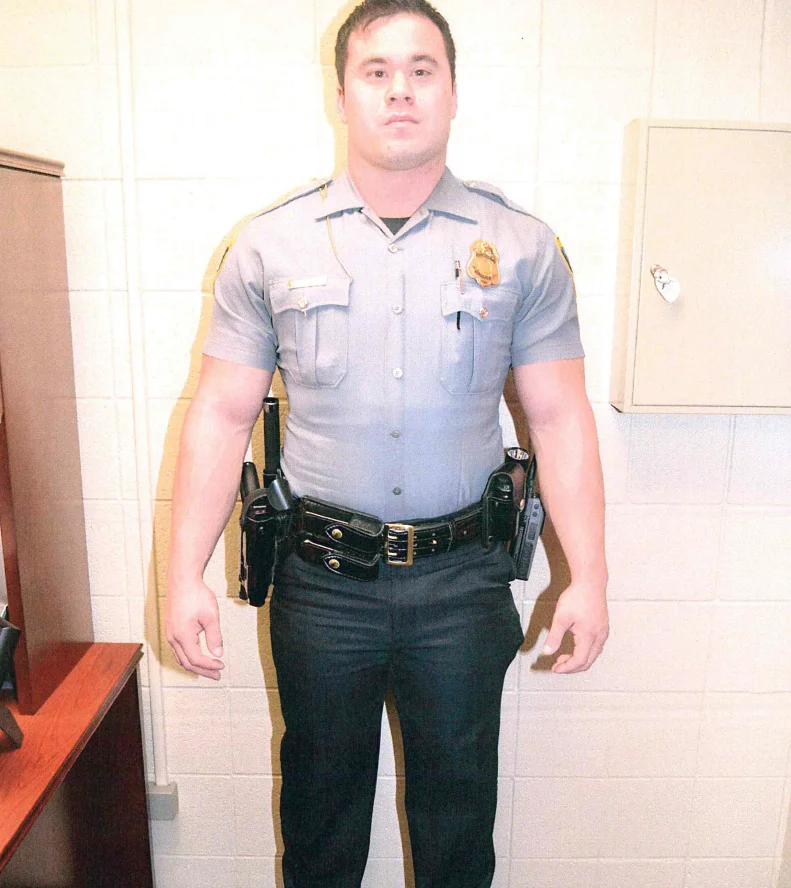
The first patrol officer to take Ligons's account that morning recorded a third version: about 35 years old, 6'00", 220 pounds, “blondish” hair. Scott Adams 00130.
Police confronted the mismatch before they ever spoke to Daniel. On the way to Springlake Station, detectives discussed the physical description with Captain Clifton. Davis's report gives his answer: everyone's hair looks blonde in the L.E.D. lights on the police cars. Scott Adams 00070. The State later formally endorsed Captain Clifton as a trial witness who would testify that LED lights make hair look blond at night.
State’s witness endorsement, Scott Adams 08299.
The lighting explanation eventually became the witness’s own. At the preliminary hearing, asked on cross-examination about having described blond hair, Ligons answered: I remember saying that,
and explained: It was the lighting and me being afraid.
Prelim. Tr. I, 276–77.
The darkness explanation did not stay confined to this accuser. Asked at her deposition about Sherry Ellis describing her rapist as a Black man, Davis answered: it is a discrepancy, but it’s dark outside. He’s medium color... because he’s part Asian too.
Davis Dep. 144:6–17.
The foundational interview was not recorded.
Detective Kim Davis took Ligons’s first account in the emergency room at Southwest Medical Center on June 18 and made no recording of it. Ligons never called 911 either, so no version of that account exists in her own words. Ligons Dep. 70:2–3 (Dec. 14, 2018).
That afternoon Davis video-recorded Daniel’s interview and had it transcribed. Six days later Gregory audio-recorded Terri Morris in the back of a patrol car. The unit recorded the suspect and another accuser, but not the woman who started the case. Scott Adams 00072–00117, 02004.
At her deposition Davis said victim interviews weren’t recorded back then, then conceded that if it’s a police officer being accused, then we record victim interviews,
and that this was established protocol. She said she had no recorder on a 4 a.m. call-out, and that if my phone was capable of recording, I would not have known how to do it.
Could she have violated the protocol? I could have violated protocol by not doing that.
Davis Dep. 79:24–80:18, 81:1–4, 81:21–25, 84:1–8 (Jan. 29, 2019).
She was the on-call Sex Crimes detective. A four-in-the-morning call to a rape complaint is the job, and a recorder is the tool. The first interview of the first accuser, the one the whole case grew from, exists only as what Davis remembered of it.
Her typed summary went into Varuna on July 24, 2014, more than a month later and after unidentified female DNA had turned up on Daniel’s pants. Muzny approved it August 20. Her notes? I threw them in the trash.
Scott Adams 00061–00064; Case 14-049050 supplement 005; Davis Dep. 90:5–23.
Gregory’s report and the recording don’t agree about Daniel’s underwear. His supplement says Daniel told him his underwear had been washed. Scott Adams 01147. The transcript says it was in the washing machine, and Davis confirmed that at trial. Scott Adams 00104; Trial Tr. 1146. A garment sitting in a washer became a washed one, and nobody went to get it. Davis’s summary of the Ligons interview has no recording to check it against.
Six report numbers in the file are unaccounted for.
On December 4, 2014, Captain Vance Allen of OCPD’s Office of Professional Standards told Ron Bacy that supplement reports 36 through 41 were missing from the Ligons file in Varuna: Usually what this means is that somebody started a report but then, for whatever reason, deleted the report.
Allen email to Bacy, Dec. 4, 2014, OKC 0272–73 (produced in Ligons v. City of Oklahoma City, No. CIV-16-184-HE).
He wrote that before anyone had answered his question. What, if anything, the six reports contained is not in the record.
Police planned a lineup for Ligons. No record says why it was dropped.
On the afternoon of June 18, the plan was to show Ligons a photo lineup. Lt. Muzny’s report says he built one from photos of Springlake’s second- and third-shift officers and told Davis that he and Gregory were ready to show it to Ligons. Davis reviewed it, wasn’t happy with it, and asked for a meeting with Deputy Chief Kuhlman, where the AVL check left Daniel as the only officer who couldn’t be eliminated. Scott Adams 00126.
| Time (June 18) | What happened | Source |
|---|---|---|
| 2:15 p.m. | A CSI is told to contact Davis; arrangements are made for her to go to Springlake and photograph “the involved officer.” | Scott Adams 00152 |
| ~3:00 p.m. | Muzny calls about the Surety video. | 00126 |
| ~3:20 p.m. | Muzny picks up the video. Davis comes to him; he heads back to the office to start on the lineup. | 00126 |
| No time given | Muzny builds the lineup. Davis is “not happy with the lineup.” Meeting with Wenzel and Kuhlman; the AVL check names Daniel. | 00126 |
| 3:30 p.m. | Two CSIs leave for Springlake at Davis’s and High’s request. | 00158 |
| 3:45 p.m. | CSIs arrive at Springlake. | 00152, 00158 |
| ~3:45–4:00 p.m. | Daniel tells Davis he made the stop. CSI photographs him, “suitable for a photo lineup.” | 00070, 00152, 00158 |
| ~4:27 p.m. | At headquarters, Gregory and Davis begin talking with Daniel. | 01146 |
| 4:47 p.m. | Daniel signs a waiver authorizing a body search and buccal swabs. | 04297 |
| 10:38 p.m. | Ligons’s sister tells a cousin on the force that investigators told Ligons they’d show her pictures. | 00059 |
The reports don’t fit together. Muzny puts the lineup, Davis’s rejection of it, the Kuhlman meeting and the AVL result that named Daniel after he picked up the Surety video around 3:20 p.m. But arrangements to photograph “the involved officer” at Springlake were already being made at 2:15. When Daniel arrived for his shift, the detectives and both CSIs were already waiting for him; the CSIs had gotten there at 3:45. Scott Adams 00070, 00126, 00152, 00158. Nothing in the file explains how Muzny’s sequence fits in that window, or when Daniel was first named.
At Springlake, Daniel told Davis he had made the stop. Then, Davis wrote, I told him we needed to get an updated picture of him.
Scott Adams 00070. The CSI recorded what the pictures were for: photographs suitable for a photo lineup.
Scott Adams 00152. The stop was admitted, and the lineup was still on. That night, Ligons’s sister told a cousin on the force that investigators had told Ligons they would show her pictures to see if she could pick him out. Scott Adams 00059. No report mentions a decision to drop it. Of the three detectives’ reports on how Daniel was named, only Muzny’s mentions a lineup at all. Davis’s and Gregory’s go straight from the AVL result to the decision to talk to him: it was determined that we would speak to Ofc. Holtzclaw.
Scott Adams 00070, 01146.
Nobody who handled the lineup can account for it, and they don’t agree it existed. Muzny’s report says he built it and that Davis was not happy with the lineup,
without saying why; years later he said her rejection doesn’t ring any bell for me.
Scott Adams 00126; Muzny Dep. 223:14–19 (Mar. 26, 2019). Gregory said he saw it and that Muzny had more of a hand in putting that -- putting it together,
but he couldn’t say why Davis was unhappy or remember it being called off. Gregory Dep. 141:8–142:10 (Jan. 17, 2019). Davis, asked whether Muzny had put together a lineup for Ligons, said: No.
Asked why none was shown, she gave three answers: she had no one to put in one at the hospital, no lineup was ever built, and Holtzclaw told me he made the stop. So a lineup is irrelevant to me.
Davis Dep. 123:3–124:9, 173:16–20, 219:23–25 (Jan. 29, 2019).
Muzny did give a reason: we’re not going to show somebody a lineup when we know who the suspect is.
That’s a fair rule once a suspect admits being there. Asked why a lineup wouldn’t have strengthened the case anyway, he gave a second one: there’s a chance that she could… she would not identify the right person.
Muzny Dep. 224:8–18. With the stop admitted, a wrong pick couldn’t have cleared Daniel. It would have shown how far the man Ligons described that morning was from the man who stopped her.
What he did that day.
Daniel admitted the stop and denied any misconduct. Asked at the end of the interview whether anything sexual had happened, he said: Nothing sexual.
Trial Tr. 1145. Davis testified that his account of where he went, what was said and what he did stayed the same no matter how many times the detectives left the room and came back to go over it again and again and again.
Trial Tr. 1175. What else he gave them that afternoon, his DNA, his pants and a polygraph offer, is discussed in Who Daniel Was. What the pants led to is discussed in The DNA.
The testing did not corroborate the allegations.
Ligons underwent a sexual-assault examination within hours of the alleged forced oral sodomy. The laboratory results were negative across the panel: the oral wash and external oral swabs were negative for acid phosphatase, the presumptive test for seminal fluid; microscopic examination of the oral wash found no spermatozoa; and the oral wash was negative for p30, prostate-specific antigen. Forensic Examination Report SD-14-273, p. 6 (Nov. 12, 2014). At trial, the analyst confirmed that DNA testing of the oral samples found only Ligons’s own DNA, with no sperm present. Unfortunately in this case,
she told the jury, both the epi and the sperm fraction are consistent with Ms. Ligons.
Trial Tr. 4038–39. Those negative findings do not establish that oral contact did not occur; they provided no biological corroboration for it.
The fly of Daniel's uniform pants, the only physical evidence offered to corroborate any sexual-assault allegation in the case, carried a profile reported as consistent with Adaira Gardner as the major contributor. It carried no DNA attributable to Ligons: on the left-fly mixture, every reference in the case other than Gardner, Ligons included, was expressly excluded. Forensic Examination Report SD-14-273, pp. 7–8.
The patrol-car testing found no fingerprints and no DNA profile attributed to Ligons. One seat-cushion swab produced a weak, partial mixture from which she could not be excluded, based on just five usable loci, a result far short of the full-profile identifications elsewhere in the same report. It does not identify Ligons as the source, and it cannot say when or how the material got there. Forensic Examination Report SD-14-273, p. 7. Trial Tr. 4038; 482, 508, 1095–96.
Before he had seen it, Daniel told detectives what the video would not show. He was right.
There was a camera on the corner. Surveillance from the Old Surety Insurance building at 5102 N. Lincoln recorded the stop from 2:02 to 2:16 a.m., and detectives had it before they sat Daniel down that afternoon. He hadn’t seen it. Gregory told him: “we pulled up a lot of video around that area.” Then: “if we go off the video and watch that, you’re still going to stick with your story?” “Yes, sir.” Davis: “If we go off DNA?” “DNA as well.” Gregory: “Should we show you the video?” “Yes.” Gregory, a few minutes later: “these videos ain’t helping … it’s not looking good so far.” Scott Adams 00015, 00018, 00125.
Davis then asked him what the tape would show. “On the video are we going to see her boobies?” “You shouldn’t see her boobs. I didn’t see her boobs.” “Are we going to see her pull her pants down?” “I didn’t see her pull her pants down.” “Are we going to see your penis out?” “No.” “Are we going to see your penis go in her mouth?” “No.” Scott Adams 00019–00020.
He was right on every count. The footage showed the headlights of two vehicles and a U-turn; the patrol car’s flashing lights washed out everything else, and the OSBI’s enhancement couldn’t recover more. None of the other cameras on the corner showed anything. Scott Adams 00067, 00127, 00145, 00348. The video proves nothing about what happened in the car. What it tests is Daniel. A detective had just told him the tape was “not looking good,” and he said, without hesitating, that it would show no breasts, no pants down, no penis. A man who had done what Ligons described could not have known that. He knew it because nothing had happened.
What the Ligons allegation contributed to the case.
Ligons’s report made Daniel the focus of a sexual-assault investigation. Detectives then reviewed his traffic stops, case numbers, and female database contacts while searching for additional accusers. Scott Adams 00140.
By the time of Daniel’s arrest on August 21, 2014, the warrant covered seven accusers. The prosecution ultimately included thirteen accusers and thirty-six charges. Scott Adams 00159.
For the Ligons allegation itself, the principal issues are the unrecorded first interview, the description that did not fit Daniel in several respects, the prepared lineup that apparently was not shown, the absence of supporting surveillance evidence, and forensic testing that did not corroborate the alleged oral contact.
The jury convicted Daniel on both Ligons counts: Count 15, procuring lewd exhibition, five years; and Count 16, forcible oral sodomy, sixteen years. Trial Tr. 4324. The court ordered every sentence to run consecutively. Twenty-one of Daniel's 263 years came from the allegation described on this page. Sentencing Tr. 46 (Jan. 21, 2016).
Help fund the work.
UNCUFF funds investigation, forensic review, records work, post-conviction litigation, and telling the stories of wrongfully convicted people to the public.