
Demetria Campbell
When altered narratives suddenly mattered to Oklahoma City.
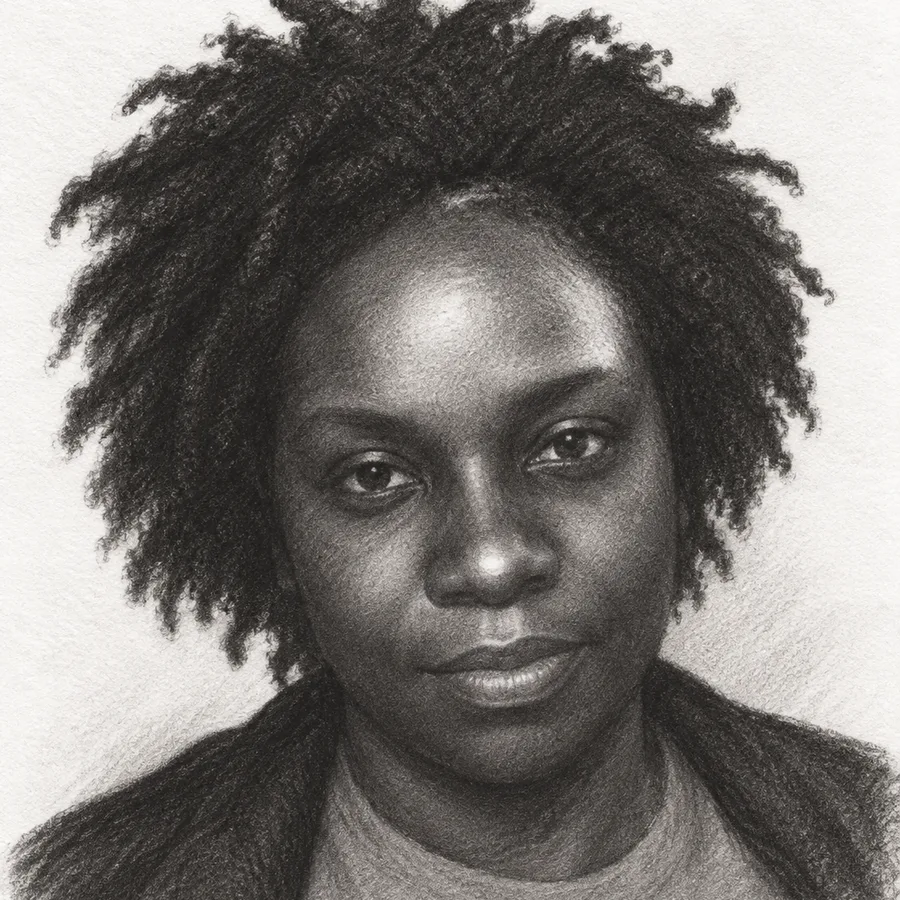
On November 5, 2013, Daniel Holtzclaw mistakenly detained Demetria Campbell while investigating a stolen car. Campbell complained about the encounter that same night. She went to an emergency room, spoke at length with an Oklahoma City police lieutenant and consulted a lawyer the next morning. No contemporaneous record contains an allegation of sexual misconduct.
Nearly two years later, after Daniel had been arrested and publicly accused of sexually assaulting multiple women, Campbell sued Daniel and the City of Oklahoma City. Her lawsuit alleged that while she was handcuffed against a wall, Daniel had pressed an erection against her buttocks for approximately two minutes. City’s Reply at 6–7, Campbell v. City of Oklahoma City, No. CJ-2015-4217; Campbell Dep. 51:8–53:13.
UNCUFF does not believe that allegation is true.
Campbell’s case also offers a comparison. When her changing account exposed Oklahoma City to civil liability, the City attacked her credibility using the same kinds of inconsistencies that police and prosecutors had been willing to overlook in women whose allegations were used against Daniel. Campbell herself was not a trial accuser. She did not testify at Daniel’s trial, he was never charged with any offense involving her, and her name does not appear in the 5,761-page transcript.
An immediate complaint, but no sexual allegation.
Minutes after Daniel released her, Campbell called her brother from the restaurant and told him that a police officer had assaulted her. She described being grabbed, put against the wall, handcuffed, placed in a police car, driven away and later released. She did not tell him Daniel had pressed an erection against her. Campbell Dep. 81:14–83:24, 98:5–12.
Campbell then went to the emergency room and reported the encounter. Her medical records document her physical complaints. They contain no allegation of sexual contact. Campbell Dep. 97:12–98:4, 101:2–6, 169:13–170:17.
Later that evening Lt. Brian Bennett came to the hospital to hear Campbell’s complaint against Daniel. Bennett described her as coherent, sober and upset, and said he had no reason to doubt what she said
. He took notes while she gave her account. His report contains no sexual allegation. Bennett Dep. 46:18–49:10; Bennett Subject Interview, Nov. 12, 2013.
After Bennett interviewed her, Campbell wrote her own account on the back of his business card. It contains no allegation of an erection. Campbell Dep. 155:18–156:17, 164:4–18; City’s Reply at 6.
Campbell subsequently saw her personal physician. Records from November 11 and November 29 discuss the encounter with the police officer. Neither mentions sexual assault, “perversion” or an erection. In her deposition, Campbell acknowledged those omissions. She also testified that she consulted a lawyer on November 6, the morning after the encounter. Campbell Dep. 147:6–149:4, 170:18–174:17; City’s Reply at 3, 6.
Campbell complained promptly and gave detailed accounts of the encounter to several people. None of the contemporaneous records mentions an erection.
Campbell says she was ashamed.
In her 2018 deposition, Campbell said she did not tell hospital employees about the sexual component because she was ashamed and felt degraded. She also testified that she had called Daniel “perverted” when she spoke with Bennett. Campbell Dep. 169:13–170:12, 176:19–178:15.
Bennett disputed that. He testified that Campbell made no complaint sexual in nature. Bennett Dep. 82:22–87:5.
Campbell also said she told her personal physician about the sexual assault on November 11. When she was shown the medical record from that visit, she acknowledged that it contained no reference to sexual assault, perversion or an erection. Campbell Dep. 170:18–174:17.
Her explanation does not change what the surviving records show: she described the encounter to family members, medical personnel and a police supervisor, but the sexual allegation that later became central to her lawsuit appears nowhere in the contemporaneous documentation.
OCPD documented what Campbell had omitted.
After Campbell filed her lawsuit, Deputy Chief Tom Jester directed Major Brian Jennings to have Bennett prepare a supplemental report about his conversation with Campbell nearly two years earlier. Jennings Dep. 164:25–166:9; Bennett Dep. 272:17–275:23. Asked how often he had received such a request, Bennett answered, “This is the only time.” Asked whether it was a normal request, he said, “It is not normal.” Bennett Dep. 275:20–23, 303:21–25.
The document was dated September 21, 2015, and plainly labeled “Supplemental Narrative Report.” Bennett Supp. Narrative Rep., Sept. 21, 2015.
Bennett did not reopen the investigation or reinterview Campbell. The report’s key new statement concerned what Campbell had told him in 2013: Bennett Dep. 280:24–281:19.
He added that Campbell had said nothing about sexual misconduct and that such an allegation would have triggered different police procedures. Asked whether the statement benefited the City, Bennett answered, I guess it would.
Asked whether it could have been written to help the City defend Campbell’s lawsuit, he answered, That could be, yeah, that could be.
Id.; Bennett Dep. 289:22–290:25.
When Oklahoma City was the defendant, discrepancies suddenly mattered.
When Campbell sued the City, its lawyers attacked her credibility.
The City told the court that Campbell’s claims were too inconsistent to be true
and merely the product of an opportunity to piggyback onto the claims of certain individuals
who had accused Daniel. It emphasized the late appearance of the sexual allegation and wrote: Simply put, the Plaintiff’s version of the events has changed every time.
It also called her claims baseless and incredible claims conveniently raised by the Plaintiff
. City’s Reply at 2–3, 6–7, 11.
The City eventually settled Campbell’s lawsuit for $25,000 without admitting liability. Associated Press, Mar. 26, 2019.
Compare Campbell with Terri Morris.
Terri Morris was one of the women the State presented at Daniel’s criminal trial. Her account changed on major details.
Morris initially gave a date, May 20 or 21, that did not fit Daniel’s whereabouts. She identified a location that did not fit. She repeatedly described her assailant’s patrol car as the older black-and-white model; Daniel drove the newer all-black car. Her account later changed to a different location, and other details of the alleged assault changed as well.
Detective Kim Davis later testified that when this first started, she was just a big fat liar.
Asked directly whether she would characterize Morris as a liar, Davis answered: Yes. She lied several times.
Davis Dep. 227:23–228:5, 256:8–13 (Jan. 29, 2019).
OCPD continued investigating Morris’s allegation, and the State presented her to the jury. Daniel was acquitted on every count involving her.
When the City had money at stake, inconsistencies mattered.
When Campbell’s story changed, Oklahoma City said her version had “changed every time,” that her claims were “too inconsistent to be true,” and that she was “piggybacking” on the other Holtzclaw allegations.
Morris’s account changed as much. OCPD kept developing her case, and prosecutors took it to trial.
The City’s civil lawyers and the Oklahoma County prosecutors were different legal offices. OCPD, however, was the investigative agency behind the criminal case. When Campbell’s changing account exposed the City to financial liability, the City attacked her credibility. When Morris’s changing account supported the case against Daniel, OCPD kept working the allegation and the State put her before the jury.
If Campbell’s changing story was a legitimate reason to doubt her, Morris’s changing story deserved the same scrutiny.
Help fund the work.
UNCUFF funds investigation, forensic review, records work, post-conviction litigation, and telling the stories of wrongfully convicted people to the public.