
Daniel Holtzclaw
An Oklahoma City police officer convicted in 2015 and sentenced to 263 consecutive years. UNCUFF believes Daniel is completely innocent and we support his effort to obtain a new trial.
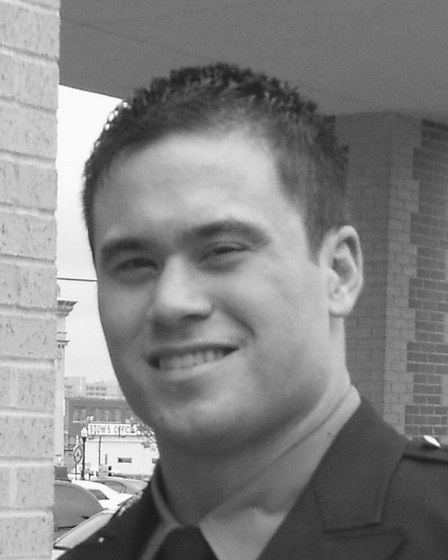
A 263-year sentence for crimes that were never committed.
In 2015, Daniel Holtzclaw, then an Oklahoma City police officer, stood trial on thirty-six counts arising from the accounts of thirteen allegedly independent women. The jury convicted him on eighteen counts. The court sentenced him to 263 years, longer than the history of the United States.
UNCUFF has reviewed roughly 14,000 pages of case material, a trial transcript of about 6,000 pages, more than thirty depositions, thousands of civil-litigation emails, and the appellate filings. We believe there is no doubt that Daniel was wrongfully convicted.
New to the case? What Skeptics Ask answers the objections people raise first, and The Verdicts, Count by Count shows which accounts the jury accepted and which it rejected.
From one complaint to 263 years.
- June 18, 2014Jannie Ligons reports a sexual assault during a traffic stop. Daniel is interviewed, answers every question and hands over his uniform pants.
- June–Nov. 2014Detectives search Daniel’s records for other women and take reference swabs from eleven of them, looking for the source of a trace of female DNA on the pants.
- Aug. 21, 2014Daniel is arrested.
- Nov. 2014Preliminary hearing. Daniel is ordered to stand trial.
- Nov. 2, 2015Trial begins on thirty-six counts involving thirteen women.
- Dec. 10, 2015The jury convicts on eighteen counts and acquits on eighteen.
- Jan. 21, 2016Daniel is sentenced to 263 years.
- Feb. 1, 2017Daniel’s appeal brief is filed, with a DNA expert’s affidavit.
- June 2017A sealed two-day hearing on an expert witness’s testimony is held without Daniel or his lawyers.
- July 2017An international panel of forensic scientists reports on the DNA evidence.
- 2018–2021In the women’s civil lawsuits, the analyst, the detectives, the lieutenant who ran the investigation and several of the women testify under oath. None of it was part of the appeal record.
- Aug. 1, 2019The Court of Criminal Appeals affirms the convictions.
- Mar. 9, 2020The U.S. Supreme Court declines review.
- 2025–2026Daniel’s experts and lawyers are allowed to read the sealed transcripts under supervision, and he seeks post-conviction relief.
Scott Adams 00072–00117; OCPD forensic case file; Trial Tr. 4323–26; Holtzclaw v. State, 2019 OK CR 17; Holtzclaw v. Oklahoma, 140 S. Ct. 1296 (2020); orders in No. F-2016-62 (2017–2026).
The State misled the jury about the evidence and its investigative method was absurd.
The only physical evidence, DNA the State attributed to one accuser on the fly of Daniel's pants, was presented to the jury as something it was not.
The State’s only claimed forensic corroboration was trace DNA in tiny quantities recovered from the fly of Daniel’s uniform pants and attributed principally to one of the accusers, Adaira Gardner. The prosecutor told the jury it was a “fact” the DNA came from Ms. Gardner’s vaginal fluids and was deposited there while Daniel raped her through the fly of his pants. This “fact,” however, had a gaping hole: The State never tested the material on the pants to see if it was vaginal cells. It never even viewed it with an Alternate Light Source, a standard step in sexual assault investigations where bodily fluids are suspected. Instead, the State’s analyst testified that a woman of Ms. Gardner’s age would secrete abundant vaginal fluids during a rape, which would carry the cells from her vagina to the fabric of the pants. The co-lead detective later referred to these secretions as “sloppy sex remnants.” Trial Tr. 4307:8–13; Trial Tr. 4065; Gill et al. (2017), pp. 11–12; Gregory–Davis interview for MMI, Sept. 19, 2016 (transcript, file 542_0930, at 2).
If the fly was saturated with sloppy remnants, the quantity of DNA would have been orders of magnitude higher. And sloppy remnants leave physical signs such as staining. There was none. The analyst who examined the pants under a very bright light and with a magnifying glass testified she could see nothing suspicious. Trial Tr. 4084:2–22.
Back in 2017, a panel of forensic scientists, including renowned DNA expert Peter Gill, looked at the case. They concluded that the DNA had little probative value, because it could be explained by non-intimate transfer of skin cells. By Ms. Gardner’s own account, Daniel went through her purse the day before, and he likely went to the bathroom afterward. Her skin cells could have passed from her purse to his hands, and from his hands to his fly when he went to the bathroom or took his pants off before bed. That could easily explain the low-level DNA found on his fly. Trial Tr. 3757:2–15; Gill et al. (2017).
See how the DNA could affect counts involving other women
Police didn’t find accusers. They went out and manufactured them.
Only four of the thirteen women came to police on their own:
- Jannie Ligons, the first accuser, said Daniel orally sodomized her through the fly of his pants. Forensic tests found no trace of Daniel in her mouth and none of her DNA on his fly. Read more about Ligons here.
- Like Ligons, Terri Morris said she was orally sodomized by a police officer. She reported it on May 24, 2014, nearly a month before Ligons came forward. Her description of the officer, his patrol car, and the date and location of the encounter did not match Daniel. After Ligons’s report, Detective Rocky Gregory went back to Morris to connect her account to Daniel. Her location moved to fit Daniel’s records, and police took a new date, May 8, from the same records. Morris never supplied that date and later testified it was wrong. Her description of the officer and his car never matched. The jury rejected her claims. Read more about Morris here.
- Kala Lyles came forward after Daniel’s arrest was publicized by the media. She claimed he raped and orally sodomized her through the fly of his pants, but none of her DNA was found on the fly. The jury rejected her claims. Read more about Lyles here.
Like Lyles, Shardayreon Hill came forward after the news media publicized the case. She told a story about being sexually assaulted in a hospital room with nurses working twenty feet away, the night Daniel got her to the ER after she swallowed PCP. The State showed the jury their Facebook messages as evidence of grooming. Daniel sent her a friend request. The first message in the thread is her reply, nineteen days after that night: “thanks for looking out for me that night lol.. make it ring ;)”.
She made her claims to a detective in a videotaped interview. Near the end of the interview she said: “even if like, even if he didn’t like even rape nobody or nothing… he’s still gonna — he’s been in contact with people that he’s arrested.” Watch it here. According to the defense investigator on the video, Brian Bates, the prosecutor had never heard that part of the tape before trial. The jury rejected her claims. Read more about Hill here.
The other nine accusers – the bulk of the case against Daniel – were proactively sought out by police. After Ligons’s report, a lieutenant went through Daniel’s patrol-car records, pulled out Black women with drug or prostitution histories, printed a packet on each one, and handed the stack to two detectives to go knock on doors. The detectives approached more than forty women, many of whom were extremely vulnerable (mental health problems, drug addiction, outstanding warrants, etc). The detectives often opened with a brazen lie. They told the women they had “received a tip” that they had been sexually assaulted by a police officer. Usually there was no tip, and Detective Kim Davis admitted under oath that she had made one up. When a woman said no, they kept going. One woman said no at least five times before the detective told her he was investigating “a really bad guy” with “lots of victims”; only then did she change her answer. And still, thirty-four women told police nothing had happened.
UNCUFF considers this to be a highly improper investigative method that is virtually guaranteed to result in false allegations. Forensic Examination Report SD-14-273, pp. 7–8; Scott Adams 00070, 01116, 01137–38, 01150, 02018; Gregory Dep. 53:13–54:12 (Jan. 17, 2019); Morris Dep. 60:15–61:2 (Dec. 13, 2018); Scott Adams 05878, 05880; Trial Tr. 1329, 1331; Scott Adams 08663 (Facebook thread); Hill video interview with Det. Gregory, Sept. 19, 2014, as quoted at trial, Trial Tr. 1422:20–1424:3 (cross-examination of Hill), 1731:1–4; Trial Tr. 2385–88, 2423–24; Mot. Hr’g Tr. 112:16–113:15 (Sept. 3, 2014); Davis Dep. 249:17–250:6 (Jan. 29, 2019); Trial Tr. 2200, 2204–05, 2221–22, 2245–47; OKC 0394–0395; Turvey & Mares, Forensic Report (July 1, 2020), at 8.
The State said the accounts matched Daniel’s records. The records chose the women.
In closing, the State told the jury that to acquit, it would have to believe the women were able to “peg the exact location where he took them” and “make up a story that just happened to match phone records.” But the women were chosen from Daniel’s records in the first place, and where an account didn’t fit the records, the records won. Terri Morris’s date, May 8, came from Daniel’s records; she testified, “It wasn’t May the 8th when I was violated.” Regina Copeland was sure Daniel pulled up beside her on 24th Street. The GPS shows he never drove on 24th, and Davis agreed under oath that it didn’t happen. The jury convicted on Copeland’s count anyway. An account that matches the records proves little when the records picked the woman, supplied the date, and overruled her when the two disagreed. Trial Tr. 4186:18–4187:8 (State’s closing); Davis Dep. 58:2–23 (Jan. 29, 2019); Morris Dep. 60:15–61:2 (Dec. 13, 2018); Trial Tr. 2925:5–20, 2933:20–2935:7.
Two women the jury believed later undercut their own accounts under oath.
In 2018, in a lawsuit she brought herself, Tabitha Barnes said six times that Daniel never touched her: “He didn’t touch me.” She still said he made her expose herself, but he is serving eight years for touching her breasts. In 2021, in her own lawsuit, Sherry Ellis testified, “I haven’t ever seen him before trial, that’s when I finally seen who the accused of raping me.” She still named him as the man. Her counts carry sixty-two years. Barnes Dep. 77:23–78:4, 100:1–101:9, 136:9–137:12 (Oct. 30, 2018); Ellis Dep. 54:12–55:11, 62:17–64:13 (Mar. 19, 2021).
Daniel’s underwear had no fly. Eight accusers said he just unzipped and pulled it out.
Eight of the nine women who alleged rape or oral sodomy told the same story: Daniel kept his pants on and his penis came out through the fly. Jannie Ligons put it plainly: “he just unzipped it and took it out.” There’s a problem with that. Under his uniform Daniel wore compression shorts, and compression shorts have no fly. His girlfriend testified that getting anything out would mean working the shorts down inside his pants, something she said would “take some work.” Not one of the eight described anything like that. Trial Tr. 4118–19, 4126–27; Scott Adams 00104; Trial Tr. 1146.
The trial was a circus.
Protesters gathered outside the courtroom. Chants demanding a life sentence were audible during testimony. The defense asked to sequester the jury; the court declined until deliberations. The Oklahoma Court of Criminal Appeals later held that the trial judge’s admonitions and protective measures were sufficient. UNCUFF disagrees and believes the jury should have been better insulated from pressure outside the courtroom. Trial Tr. 2303–21, 4315; Holtzclaw v. State, 2019 OK CR 17, ¶¶ 23–33.
They took a good young man’s life.
Daniel was 27, a young cop in a serious relationship, working one of the roughest beats in Oklahoma City and planning a family and a career. He is now 39 and has spent more than a decade in a prison cell for crimes that never happened, and a former police officer in prison faces dangers most inmates never will. Every year that passes is a year nobody can give back to him.
Daniel is still fighting, and so are we.
The Oklahoma Court of Criminal Appeals affirmed the convictions on August 1, 2019, and the U.S. Supreme Court declined review in March 2020. Daniel is now pursuing post-conviction relief in Oklahoma County District Court. Holtzclaw v. State, 2019 OK CR 17, 448 P.3d 1134; Holtzclaw v. Oklahoma, 140 S. Ct. 1296 (2020).
Much of that fight is over a record Daniel has never seen. In May 2017, while his appeal was pending, the State asked for a sealed hearing on issues attendant to the testimony of an expert witness.
It was held over two days that June, without Daniel or his lawyers. The appeals court later said his counsel should have had the opportunity to participate fully,
but the transcripts and exhibits remain sealed. His appellate lawyer was allowed to read them in 2017, under an order that barred him from sharing them with anyone, including the experts he needed to make sense of them. Not until 2025 did the court let DNA expert Dr. Michael Spence, forensic scientist Dr. Brent Turvey, and co-counsel Oscar Michelen read them, under a marshal’s supervision, and it has barred all of them from disclosing what they read. On August 13, 2026, his lawyer asked the court to let Daniel himself review the transcripts. That request is pending. Order Granting Appellant’s Motion to Review Sealed Documents, No. F-2016-62 (Okla. Crim. App. June 10, 2026); Order Granting Motion to Unseal Documents and Setting Briefing Schedule, No. F-2016-62 (June 8, 2018), at 3; Orders, No. F-2016-62 (Apr. 7, May 20, May 29, Aug. 13, Aug. 25, Nov. 14, 2025; Mar. 25, June 10, July 28, 2026); Mot. to Permit Appellant to Personally Review Sealed Documents Under Supervision, No. F-2016-62 (filed Aug. 13, 2026), at 2.
UNCUFF is helping pay for the investigation, forensic experts and litigation, because a man this obviously innocent should not have to fight alone.
Explore the evidence.
What Skeptics Ask
Thirteen women, the DNA, the records, the jury and the appeal: the objections people raise first, answered from the record.
The DNAHow the State Distorted the DNA Evidence
A trace of DNA, less than a car door handle leaves, and no stain. The prosecutor called it “fact” that it came from a rape.
The analystThe Analyst In Her Own Words
The State’s only forensic witness, on video: what she looked for, what she didn’t test, what she told the prosecutor, and what her opinions rested on.
The analystThe 2014 Bench Notes
Twenty-one pages produced as the analyst’s 2014 notes. Several record evidence that had not arrived by the date at the top, one is dated 2015, and almost nothing in them records the analysis.
The searchHow the State Manufactured Accusers
Nine of thirteen accusers were found by police, who often opened with a “tip” that didn’t exist. Thirty-some other women said nothing happened.
Accuser evidenceThe Questions Nobody Asked
Missing recordings and what the objective records actually showed, once each woman had made her allegation.
Accuser evidenceThe “Corroboration” That Wasn’t
The State said the women’s accounts matched Daniel’s records. The records were how detectives found the women.
The investigationA Rocky Timeline
Detective Gregory’s report of his search for Terri Morris: five stops in twenty-eight minutes, a start time two hours after the first stop, and a date on the report five weeks before the visit it cites.
The investigationThe Officers They Didn’t Look For
Four women described an officer who was not Daniel. The detectives checked who had run their names, found other officers, and stopped. Each description, followed through the file to where the inquiry ended.
The investigationThe Police Reports
Detectives Gregory and Davis wrote summaries, not transcripts. Where a recording of the interview survives, it has things in it the detective left out: denials, a description, a promise, a map on the table.
The investigationVery Proactive
Springlake told its officers, in email after email, to stop cars, talk to people and pull warrants. Daniel did. At trial the State called that work a habit of taking women to “secluded locations,” and the names he ran became the detectives’ list.
Case studyTerri Morris
How Morris's allegation changed, how police selected May 8, and what the AVL records do and do not show.
The first accuserJannie Ligons
The June 18 allegation, the unrecorded first interview, and the negative forensic test results.
Case studySherry Ellis
How police found Ellis, the description that did not match Daniel, and her later testimony that she had never seen him before trial.
Case studyKala Lyles
Twenty or thirty minutes through the fly, hours before the pants were seized. Her DNA wasn’t there, and the patrol car’s records leave about eleven minutes.
Case studyVictim #14
Her account fit Daniel’s records better than most. The State closed her case for a reason it never applied to the allegations it took to trial.
Case studyDemetria Campbell
A 2013 use-of-force complaint became a sexual-assault claim in a 2015 lawsuit. When it threatened to cost the City money, the City attacked her changing story with the arguments it never applied to Daniel’s accusers.
Case studyRegina Copeland
The GPS contradicts the part of her account she was surest of, and the State’s detective admitted it. The address where she placed the rape came from Daniel’s own radio call.
Case studyShardayreon Hill
She said Daniel assaulted her in a hospital room twenty feet from a nurses’ station. The friend she said she told denied it, and near the end of her police interview she said: “even if he didn’t like even rape nobody.”
Case studyTabitha Barnes
Daniel is serving eight years for touching her breasts. She told the judge she had taken only her prescriptions and tested positive for PCP. In 2018, in her own lawsuit, she said six times that he never touched her.
Case studyRosetta Grate
Twenty years for oral sodomy. Daniel radioed that he was driving her home, and the GPS has his car at the house under ten minutes. She said at least thirty. The only account police heard before his arrest pointed to July, when he was on leave.
Case studyAdaira Gardner
Fifty years. The State’s laboratory attributed DNA on his fly to her. His records show two stops and a ride home on June 17, 2014, and in her first interview she put the assault in March or April.
Case studyCarla Johnson
Sixteen years for touching. Police first read her account as rape by instrumentation. Under oath at the preliminary hearing she said there was no penetration. By her 2018 deposition he had put his finger inside her. The records show two stops he called in and a warrant check that came back clear.
The fly“I Don’t Know How He Did It.”
Jannie Ligons said it at trial. Eight of the nine women who alleged rape or oral sodomy placed the act through the fly of pants that stayed on. Under the uniform, Daniel wore compression shorts with no fly. Getting past them would take work. Nobody has ever explained how he was able to extricate himself with so little time and effort.
The DNAThe Gill Report
Six forensic scientists, led by a co-author of the first demonstration of forensic DNA profiling, found the DNA on the fly had little probative value and that the analyst and prosecutor misrepresented it. The appeals court refused their brief.
Guilt by associationOne Accuser’s DNA Carried Twelve Others
The only physical evidence belonged to one accuser. All thirteen were tried together, and jurors later said the DNA got deliberations moving when they doubted some of the others.
The courtroomThe Circus-Like Trial
The protests, audible chanting, courthouse conditions, and the denied request to sequester the jury.
The verdictsThe Verdicts, Count by Count
Eighteen convictions, eighteen acquittals, and not guilty on every count for five of the thirteen women.
The manWho Daniel Was
A rookie his supervisors called eager and liked by all, whose phone and work computer held nothing incriminating, and who sat for two hours with the detectives accusing him and urged them to test his DNA.
Read Daniel Holtzclaw’s direct-appeal brief ↗
Filed on February 1, 2017 by appellate counsel James H. Lockard and Michael D. Morehead, the brief challenges the convictions on multiple grounds. Proposition III addresses the circus atmosphere
surrounding the trial and the outside pressures confronting the jury.
Read Dr. Michael Spence’s DNA affidavit ↗
Forensic DNA expert Dr. Michael J. Spence reviewed the laboratory data and challenged the prosecution’s interpretation of the DNA recovered from Daniel’s uniform pants.
Read the Coyne–Adams amicus brief ↗
Former University of Oklahoma law professor Randall T. Coyne and former U.S. Department of Justice Civil Rights Division attorney J. Christian Adams sought leave to file this brief in support of Daniel’s direct appeal. The Court of Criminal Appeals denied the motion on March 31, 2017, so the brief was not accepted as an amicus filing. It remains useful as an advocacy document about the protesters, courthouse conditions, and possible outside influence on the jury. Order Denying Motion for Leave to File Amicus Curiae Brief, Holtzclaw v. State, No. F-2016-62 (Okla. Crim. App. Mar. 31, 2017).
Read “Secret Proceedings in Holtzclaw Case Raise Serious Issues” ↗
New York trial lawyer Oscar Michelen, writing in May 2018, examines the sealed orders and the June 2017 closed hearings against the Sixth Amendment right to be present with counsel at every critical stage and the First Amendment presumption that criminal proceedings are open, and asks how a court could exclude the defendant himself.
Watch “Daniel in the Den: The Truth About the Holtzclaw Case” ↗
This two-part documentary was reported and produced in 2016 by journalist Michelle Malkin for CRTV, and is now available free on YouTube.
Disclosure: Michelle Malkin is married to UNCUFF’s president, Jesse Malkin. She is not an officer, director, or employee of UNCUFF, and UNCUFF has no financial interest in the film.
Watch “The Daniel Holtzclaw Case from a Law Enforcement Officer’s Perspective” ↗
In this video, Jason Angel, a police officer in Oklahoma, discusses Daniel’s case from a law enforcement perspective, including how investigative bias and public pressure can shape a case.
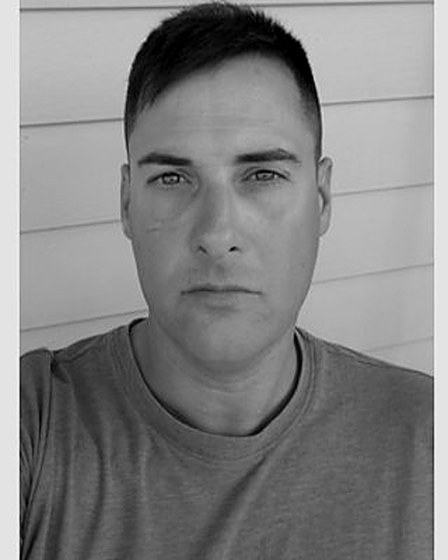
Help fund Daniel’s legal and forensic work.
Your support pays for investigation, independent experts, post-conviction litigation, and telling the stories of wrongfully convicted people to the public.