
Regina Copeland
On April 25, 2014, Daniel stopped Regina Copeland, who had been drinking. He ran her for warrants, radioed that he was transporting someone to 23rd and Miramar, gave dispatch the exact address, and was moving again at most four and a half minutes after the car stopped. Her relative lived a few doors away. Six months later, after word reached her through her sister that she had been sexually assaulted,
Copeland said he raped her there. The GPS contradicts the part of her account she was surest of, and the State’s own detective admitted it under oath. Count 29: thirty years.
What the records show: a traffic stop and a transport.
At 8:39 p.m. Daniel called in a traffic stop at NE 14th and Kelham, on a street Copeland herself said had a crack house on it. She had rolled a stop sign. She had been drinking that day, and she told him so. He looked up her name at 8:47 and ran her for warrants at 8:53. She was clear. Tr. 2815:1–3, 2821:1–4, 2898:21–2899:17, 2902:1–18; Jehle, supp. rpt., Scott Adams 00533.
He did not arrest her and did not write her a ticket. Tr. 2820:20–21. That was his call to make, and officers make it all the time. When Davis questioned Daniel in June 2014, she asked whether he was a big DUI worker.
He said he had been when he started, But, not really at the end.
Davis answered, I hated DUIs.
When she saw someone swerving, she said, she went the other way.
Daniel added that other officers do too.
Scott Adams 00013–14.
At 9:04 he radioed that he was 10-14,
the code for a transport, to the area of 23rd and Miramar, and told dispatch he would give the exact location when he got there. Tr. 2906:9–12. He did: the corner house at 24th and Miramar. Copeland’s relative lived a few doors from that corner. Tr. 2903:9–2904:7; 2895:15–18.
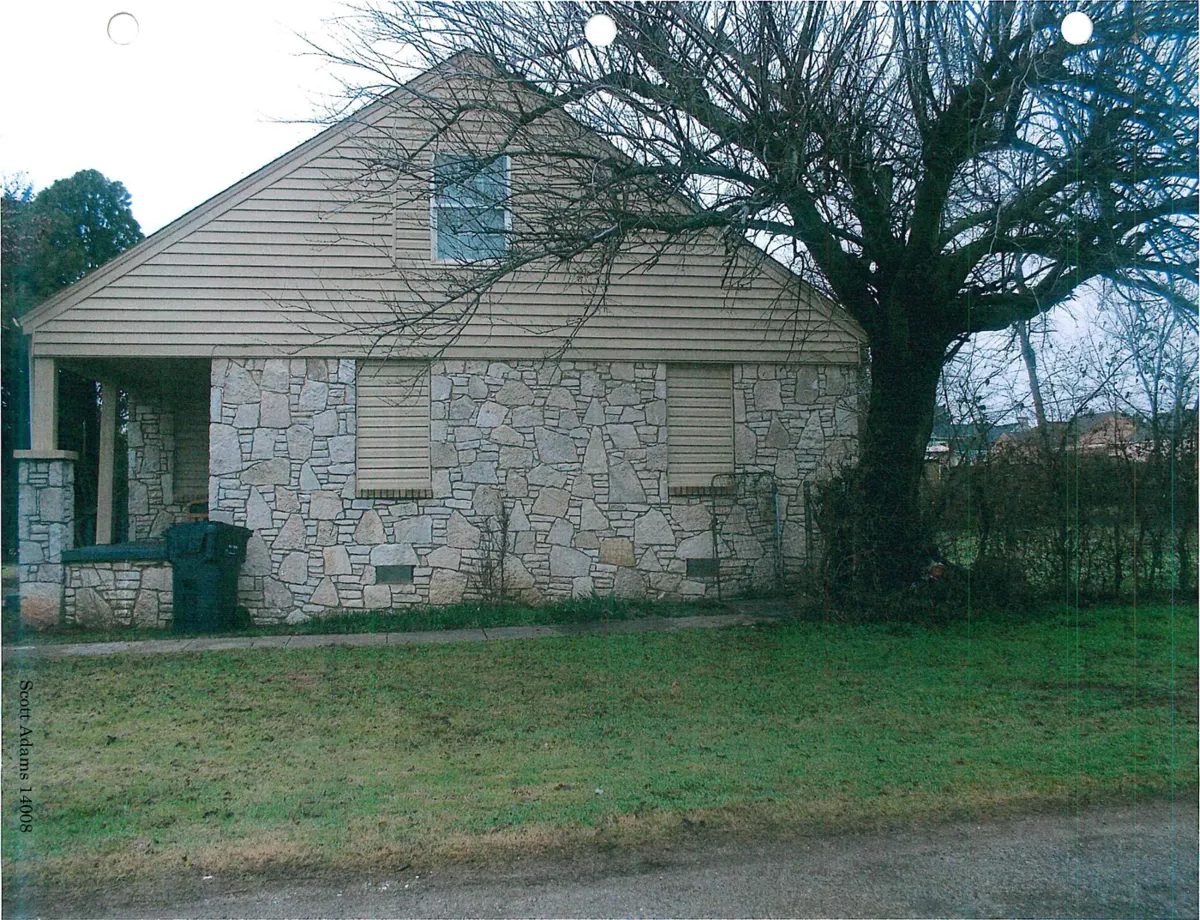
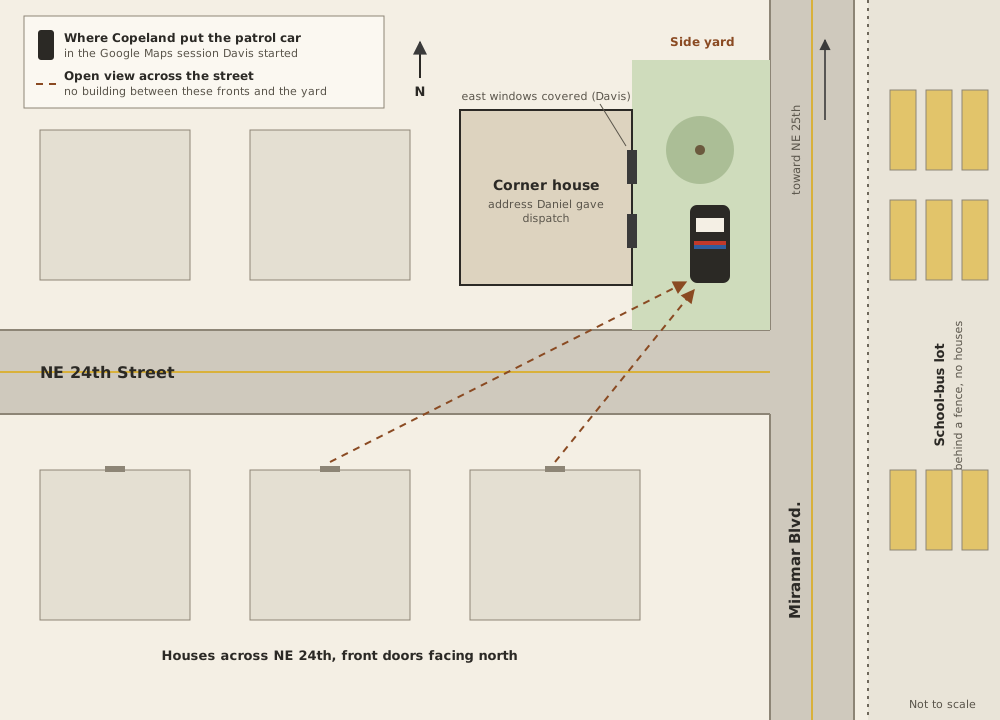
According to the car’s GPS, Daniel drove up 16th Street to Miramar, turned north, stopped near the corner of 24th, turned around before 25th, and drove off. The longest the car could have been stopped there was four minutes and thirty-three seconds. He closed the call at 9:15:32 and was moving again one second later. Tr. 2926:9–21, 2936–37, 2938:16–23, 2902:11–18.
Those records fit an ordinary transport. An officer who gives a woman who has been drinking a ride to her family’s house, instead of taking her to jail or letting her drive, tells dispatch he is transporting someone, says where, drops her off and goes back on patrol. Copeland agreed at trial that her family had been worried about her erratic driving that day, before the stop. Daniel’s lawyer posed a question about this to Detective Kim Davis, who investigated Count 29: wasn’t the GPS more consistent with Daniel driving Copeland to the corner of 24th and Miramar, letting her out and going back on duty? Davis: No, why would he do that? She didn’t live there.
Tr. 2852:3–9, 2950:3–20. The prosecutor made the same argument in closing: it is not reasonable for him to take her home or let her drive home or be at 24th Street, period… There’s no reason to go to 24th Street unless — unless you’re gonna do exactly what she said.
Tr. 4300:4–12. The reason was a few doors away: her relative’s house. Copeland had been drinking, and her family had been worried about her driving that day. That’s reason enough to drive her there.
The prosecutor asked Davis about the radio call: was it significant that a man about to commit a sexual assault would give dispatch his exact location? Davis: he did the same thing with Rosetta. He’s just telling the dispatcher where he’s at.
Tr. 2907:12–17. Davis meant that the call was routine and proved nothing. But in Copeland’s account the rape happened outdoors at the very address he had just given dispatch over the police radio, beside Miramar Boulevard, while his car’s GPS recorded where he was. UNCUFF is not aware of any serial rapist who called in the location of his rapes to the police ahead of time.
Davis called Daniel’s card deceptive. Detectives didn’t hold the women to that standard.
The State’s answer to the transport was Daniel’s activity card, the log officers fill out themselves after each call. For 8:50 to 9:05 it shows a traffic stop at NE 21st and Granada. It doesn’t show 14th and Kelham, 24th and Miramar or a transport. Tr. 926:9–15, 3131:24–25, 2908:10–2909:17. Davis said he wasn’t logging the correct times and he didn’t log the correct locations,
and called it deceptive.
Taken together, she said, if you combine the two it didn’t give the total amount of time that he was actually on the traffic stop and the transport.
Tr. 2909:21–25. The card shows fifteen minutes. Dispatch shows about thirty-six, from 8:39 to 9:15. Tr. 2902:16–18. In closing the prosecutor gave the card one line: There’s no report. And his activity card shows he was somewhere else.
Tr. 4300:16–17.
Neither Davis nor the prosecutor explained how the card would have hidden a rape. A supervisor reading only the card would see a fifteen-minute traffic stop and no transport. But the stop was all over dispatch: the plate, her name, the warrant check, the 10-14 and the exact address on Miramar. All of it went out over the radio while twelve other Springlake officers were working the same shift, four of them in Daniel’s own sector under a lieutenant. Tr. 2902:19–25, 2903:9–25; Springlake Shift 2 line-up, Apr. 25, 2014, Scott Adams 00209.
The card fails as cover anyway. A man hiding a rape would want his records to put him far from the scene, or to leave the stop off entirely. Daniel’s card logs a traffic stop at nearly the same time, about half a mile from the real one, between the stop and Miramar. It hides nothing dispatch didn’t already have. It looks like the kind of mistake an officer makes filling in the card later from memory. Daniel’s lawyer told the jury that Daniel isn’t worth a damn with paperwork,
and that the State never showed his cards were complete for the women he stopped who said nothing happened. Tr. 4268:7–4269:4.
Davis measured Daniel’s card to the minute. Detectives didn’t measure the women that way.
Show how detectives treated the timing in three other accounts
Kala Lyles said the rape at the school lasted Probably like 20 or 30 minutes.
The GPS put the car there for about eleven. Davis’s verdict on the records: it just matched her story.
Tr. 3627:19–21, 3708:23–3709:23. Sherry Ellis told Davis the rape at the school lasted ten minutes, and testified it happened before midnight.
The records put her stop at about 1 a.m. and showed no stop at the school long enough to register. Asked whether Ellis’s ten minutes was untrue, Davis said: By AVL, yes, correct.
Daniel was convicted on that count anyway. Tr. 3000:7–9, 3085:3–4, 3092:21–22, 3129:17–3130:1, 3133:24–3134:3. Terri Morris always placed her assault on May 20 or 21, near the City Rescue Mission downtown. The date that went to the jury, May 8, was one Detective Rocky Gregory found in Daniel’s records, almost two weeks earlier, and the place was on the northeast side. Tr. 3284:3–16; Scott Adams 01137–39.
Six months later, police came looking for her.
Copeland never reported anything to police. She was found the way most of the accusers were: an officer assigned to Sex Crimes was going through the names Daniel had run, saw hers, and handed Davis her printout. Jehle, supp. rpt., Scott Adams 00533. By then Copeland was living in Garland, Texas.
Davis reached her sister first and asked her to have Regina call. On the recording of the interview that followed, Copeland described what her sister passed along. The sister had asked whether Regina was in trouble. The answer that came back: ‘No!’ … ‘You were sexually assaulted.’
When my sister said ‘sexual assault’ it automatically took me back.
Copeland Interview Tr. 20 (Oct. 13, 2014). As the message reached her, it was a statement, not a question. Before Copeland had told police anything, she was told she had been sexually assaulted. Davis’s report says that when Copeland called, Davis told her she was investigating a case involving an officer who had been inappropriate with women,
and Copeland said an Oklahoma City officer had sexually assaulted her. Neither call was recorded, and the report doesn’t give their dates. Scott Adams 00510; Tr. 2928:10–23.
Copeland didn’t want any part of it. In 2021 she said Davis told her they knew about what had happened to me and that I needed to testify. And I told her that I wasn’t going to testify. And she said she would subpoena me to testify.
Copeland Dep. 57:14–22 (Mar. 18, 2021). On the tape, one of Davis’s first questions was where are you living where I can mail you a subpoena if it comes to that?
Copeland Interview Tr. 1–2. Near the end Copeland told the detectives that if they hadn’t contacted her, I woulda went on with my life.
Davis’s partner, Detective Valari Homan, replied that this will creep up in your life, whether we take care of it now or later.
Copeland Interview Tr. 25.
After that call and before the detectives arrived, Copeland’s daughter looked up the news articles about Daniel and showed her his photograph: she showed me the picture and that was him.
Davis agreed at trial that this happened before the interview. Copeland Interview Tr. 20; Scott Adams 00512; Tr. 2929:11–2930:7. Nobody disputes that Daniel was the officer who stopped her; his own records say so. What matters is the order. By the time she gave the detectives her recorded account, she had heard from her sister that she had been sexually assaulted
and had seen the coverage of the case against him.
The GPS contradicts the part she was surest of.
Copeland’s account was that Daniel told her at the first stop that he was taking her to detox. She begged him not to make her leave her car on that street, and he let her drive it to her relative’s house. He followed her, pulled up beside her after she parked at her relative’s house on NE 24th and put her in his back seat. She thought she was on her way to detox, she said, when he drove her around the corner to the school-bus lot and raped her. At trial she was firm about it. Tr. 2816:5–13, 2820:16–21:12, 2822–24, 2825:3–16, 2858.
The GPS says Daniel never drove on 24th Street. Davis admitted it. On direct, the prosecutor asked whether it concerned her that Copeland put the patrol car on 24th while the GPS put it on Miramar:
DAVIS: “his car never goes on 24th Street… her memory just wasn’t correct on him driving down 24th. He didn’t do it.”
On cross, Daniel’s lawyer reminded her that Copeland had insisted Daniel pulled up beside her car:
Q: “And you would agree with me that from the information that we’ve received from AVL we know that that is not true.”
DAVIS: “Correct.”
Q: “None of that is true.”
DAVIS: “Correct.”
Q: “…at no time … does the AVL ever show Officer Holtzclaw on 24th Street on April the 25th, 2014.”
DAVIS: “Yes.”
Q: “We know for a fact that didn’t happen.”
DAVIS: “Correct.”
Tr. 2925:5–20, 2933:20–2935:7.
Davis reconciled the two with a version Copeland never gave: that Copeland parked, got out, and walked three houses down to Miramar to climb into the car of the officer who had just made her strip at the first stop. That’s what I believe.
Her reasons: He still had her driver’s license,
and I believe that she thought she was going to detox.
Tr. 2945:17–2946:9, 2947:2–4.
Davis also conceded that nothing but Copeland’s word put her car on 24th Street at all. She agreed she had no evidence that Copeland drove there and parked; she had interviewed one person about it, and no one saw the car there that day. Tr. 2952:11–2953:12. If Copeland rode from the stop in the patrol car, nothing needs reconciling. A 10-14 is the code for transporting a person, and Daniel never drove on 24th. Davis later said officers also use it when escorting someone in another car. But she had already told the jury there’s no code for following a drunk driver: you better not be following a drunk driver.
Tr. 2903:9–13, 2904:20–23, 2925:5–20, 2904:15–19, 2934:17–2935:1. Davis’s own GPS report points the same way. By its clock, Daniel’s car started moving again at 9:03 p.m., the same minute he radioed the 10-14. He announced a transport as he pulled away from the stop. In Copeland’s account she didn’t get into his car until 24th Street. The report still says the GPS coincides with Regina’s statement that he followed her to a relative’s house.
Scott Adams 00514.
The time is tight. Daniel radioed that he had arrived at the corner house at 9:12:32 and cleared the call at 9:15:32, three minutes later. Tr. 2903:21–25, 2902:11–18. Reading the GPS as generously as possible, Davis agreed that four minutes and thirty-three seconds was the longest amount of time it could be
for the car to stop, Daniel to get out and open the rear door, the assault, Daniel to radio his location, close the call and drive off. Tr. 2938:1–6, 2945:4–8. At trial Copeland said the assault lasted maybe about three minutes or so.
In the recorded interview she had said he ejaculated ’cause he was doing it for a long time.
Copeland Interview Tr. 14; Tr. 2830:23–25.
Both acts she described happened outdoors. At the first stop, on a residential street, she said he had her pull her pants and underwear down beside her car with his overhead lights flashing. Davis didn’t ask anyone on that street whether they saw it. Tr. 2856:4–2857:4, 2932:13–17. The second spot was the side yard of the corner house. Davis checked only that house’s windows, which were covered. The houses across NE 24th face the yard with nothing in between, though it was dark and nothing in the record says who was home. Tr. 2897:4–24. In closing, the prosecutor told the jury that all of the women on the rape counts, Copeland included, were taken to secluded locations by the defendant. They were alone, there was no one to help them.
Tr. 4174:3–9, 22–25.
Nothing in the records corroborates the detox, and detox is why Copeland said she got into his car. Daniel never radioed it, and Davis agreed the only source for it was Copeland. What he did radio was a transport to 23rd and Miramar, the area where her relative lived, and that is where the GPS shows he went. Tr. 2947:5–19, 2906:9–12.
The date, the time and the spot came from Daniel’s records. The State told the jury her account matched them.
Copeland couldn’t give the date. It happened either the end of April or the first part of May.
She couldn’t give the time beyond night time,
before midnight: I can’t pin point what time of night it was.
For the stop she said Kate or Kelham.
For the second spot she said I don’t know if that’s Miramar over there in that area, but it’s where the school buses are,
and I don’t know the exact address.
Copeland Interview Tr. 3, 7–10. Davis’s report lists the occurrence date as 04/25/14 in its header, and its narrative records her answer as the end of April or the first part of May. Scott Adams 00510–11.
The cross street and the times came from the detectives. Before Copeland had named any cross street, Homan asked, To like 25th and Miramar?
She said Yeah.
When Davis later asked whether the house was on 24th, 25th or 26th, Copeland said It’s gotta be like 25th,
either the second house from the corner or the third house.
Homan: So, 25th and Miramar.
When Copeland worried that she couldn’t give times, Davis said You don’t worry about that. That’s our job.
Homan: everything we do is documented, by our phones, by our vehicle, by something. So we’ll find when he stopped you.
Copeland Interview Tr. 10, 15, 24.
The next day Davis and Homan went to the corner house, the address that Officer Holtzclaw said on the radio when he put himself ‘10-14.’
Davis wrote that they couldn’t tell where in the bus-barn area the assault took place. She phoned Copeland and had her pull up that address on Google Maps. Copeland said it wasn’t the house and scrolled to another house a few doors away. Davis: I had her look at Miramar and the bus barn. I told her to explain where Officer Holtzclaw parked his vehicle when he assaulted her.
Copeland put the car in the grass on the west side of Miramar, in the side yard of [the corner house].
Scott Adams 03332. Davis took the time from Daniel’s records as well. Her report gives the stop as 8:48 to 9:15 p.m. Scott Adams 03333.
At trial the State presented those details as hers. The prosecutor asked Davis about Ms. Copeland telling you that that house [at the corner] was the house that he eventually parked beside or in the grassy area.
Tr. 2906:19–21. Davis agreed that the GPS was consistent with what Ms. Copeland told you,
and that the four and a half minutes the car sat near 24th and Miramar was consistent with what Ms. Copeland had told you about the length of the actual sexual intercourse.
Tr. 2913:15–20, 2927:2–5. On the tape, what Copeland had said was that he was doing it for a long time.
Copeland Interview Tr. 14.
What Copeland supplied herself, a stop near Kelham and an end point near the school buses on Miramar, is consistent with a ride. The date, the time and the address came from Daniel’s records. The spot in the side yard came out of the Google Maps session Davis started at that address. At trial the State presented them as matching her account.
By her own account, she told no one about a rape until Davis called.
On the recording, Copeland said that on the night of the stop she told her brother John only that the officer made me pull down all my clothes, my panties and everything. But I didn’t tell him the whole detail.
Her younger brother David: I told him after you called me.
I didn’t tell anybody in details what had happened that night…
Davis finished the sentence for her: Until after I called.
Until after you called.
Copeland Interview Tr. 15–16.
Davis then phoned the family. David said Regina had called him last week
and said an officer raped her, and that a detective had called her about it. Scott Adams 00526. John’s memory matched what she had told the detectives. He recalled a night sometime during the summer
when she came to his house upset, having lost her keys, and slept on his couch. She told him she got pulled over by an officer and he made her pull her clothes down
and that the cop was messing with her.
She said nothing to him about a rape. Then, about a week before Davis reached him, Regina had called him and asked him if he remembered when she spent the night with him when she lost her keys… Regina told him she hadn’t told him everything.
Scott Adams 00528.
David’s wife, Mollie, told Davis something different. Davis phoned her after Regina had told David about the rape. Mollie said that on a summer night when she and David picked Regina up, Regina told them an officer had made her take off her pants and had raped
her. David, who was driving, didn’t remember it. Scott Adams 00526, 00529–30. At trial the State called Mollie to rebut the claim that Copeland made it up after seeing the news. Asked whether Copeland told her in the car about having been sexually assaulted by an officer, Mollie said yes before the defense objected, and the judge sustained the objection. Allowed to give only the topic, she said it was this officer who had put his hands on her.
She placed the ride in the summer of 2014, probably July,
and before Copeland moved to Texas. Copeland had moved in the first part in May.
Tr. 2883–84, 2885:15–20, 2887:20–2888:19; Copeland Interview Tr. 2.
So the only report of an earlier rape disclosure is Mollie’s, given to police after the investigation had reached the family. Her husband, who she said heard it too, didn’t remember it, and Copeland herself said she told no one about the rape.
There is no police report from that night, no record of any medical exam, no clothing and no DNA. Davis took a DNA sample from Copeland to compare with the unknown female DNA inside Daniel’s uniform pants. It wasn’t hers. Scott Adams 00510; Tr. 2870:6–19, 2927:6–25; Copeland Interview Tr. 19.
He gave her a ride.
The only records from April 25, 2014, are Daniel’s own: his radio traffic, his warrant check and his car’s GPS. Together they describe a stop, a warrant check, a transport announced to dispatch, a stop of a few minutes at a corner a few doors from her relative’s house, and a patrol car back on the street within minutes. The allegation came six months later, after the message through her sister. Her detailed account came after the photograph and the news coverage her daughter showed her. The address where she placed it came from his radio call. The State’s own detective conceded that the most detailed part of her account, the drive down 24th Street, didn’t happen.
The jury convicted Daniel on Count 29, first-degree rape, and he is serving thirty years for it. Tr. 4324–26. UNCUFF believes Daniel gave Regina Copeland a ride, and that the where and when of the rape allegation were filled in afterward from his own records.